
Find the Right Market Report
Search thousands of industry reports, market insights, and research studies in one place.
Search thousands of industry reports, market insights, and research studies in one place.
The US. RNA interference therapy market is growing rapidly due to rising use of gene silencing, advanced RNA therapeutics, and increasing demand for targeted treatments in cancer and genetic diseases.


RNAi becomes more widely applied in gene silencing and drug development because of its high level of specificity, lower side effects, and ease of synthesis, which drive the growth of the market.
RNAi is a significant tool in functional genomics; it allows basic research on all genes, which is vital to understand gene function and genomic interaction among genes, DNA, and RNA sequences. The results and uses are from low to full downregulation of single genes or gene families, in order to change plant features and enhance plant diversity while protecting natural resources. RNAi improves plant protection against diseases, pests, and environmental stresses. RNA interference is a biological process in which double-stranded RNA molecules sequence-specifically suppress gene expression. An RNA-interfering therapeutic is a gene-silencing medicine that inhibits the production of unwanted proteins, which cause disease.
The global RNA interference therapy market size was estimated at USD 4.85 billion in 2025 and is predicted to increase from USD 5.71 billion in 2026 to approximately USD 24.96 billion by 2035, expanding at a CAGR of 17.8% from 2026 to 2035.
RNA-driven therapeutics have transformed modern medicine, offering adaptable and precise modalities to moderate gene expression for a broad range of diseases, involving infectious diseases, genetic disorders, and cancer. Evolution and existing landscape of RNA therapeutics, encompassing major classes like small interfering RNAs (siRNAs), mRNA vaccines, antisense oligonucleotides (ASOs), and emerging RNA editing technologies such as CRISPR-Cas13.The integration of targeted RNA therapeutics, accurate RNA editing, and artificial intelligence-based design and clinical decision support heralds a novel era of individualized and adaptive therapies.
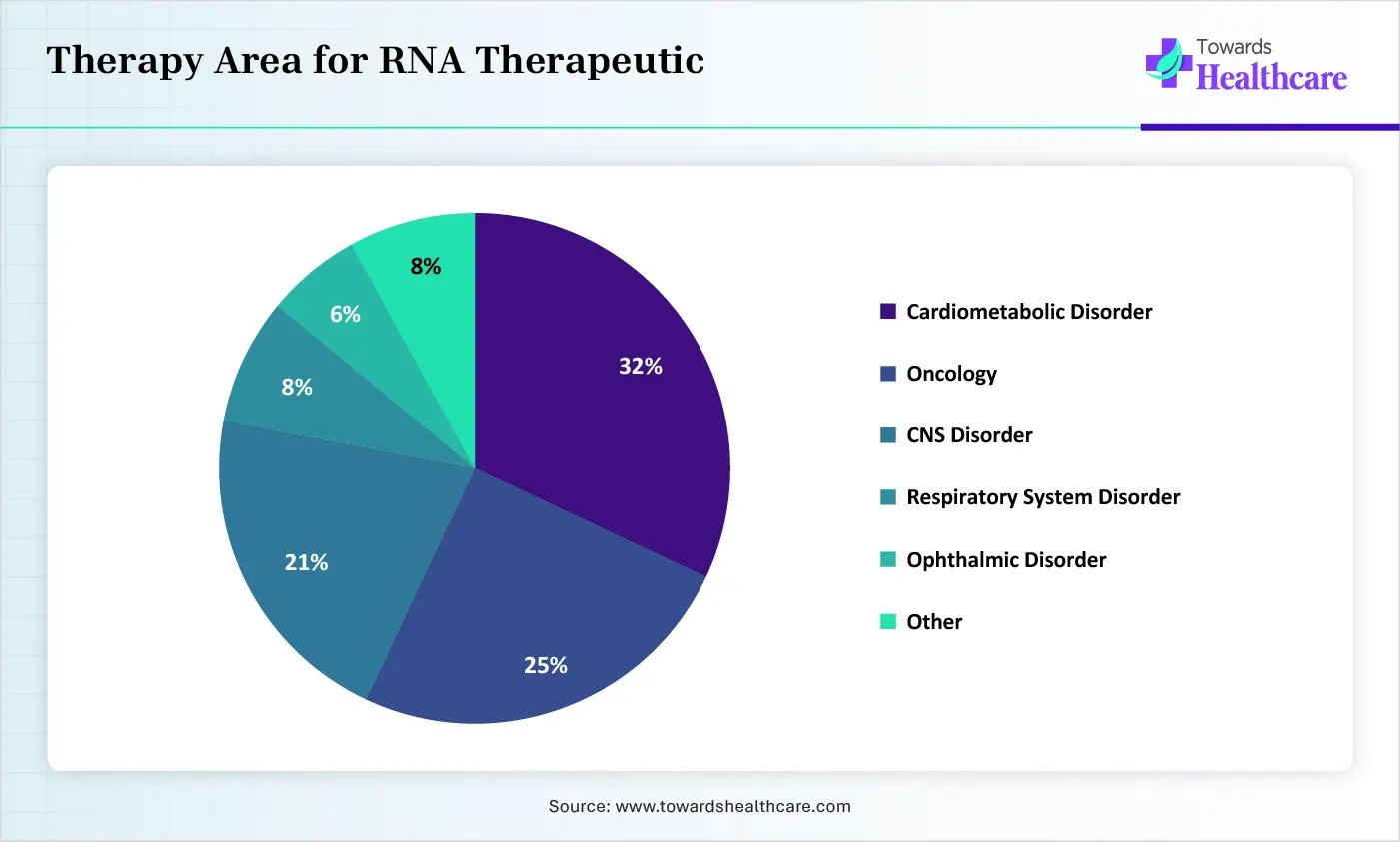
| Areas | Percentages |
| Cardiometabolic Disorder | 32% |
| Oncology | 25% |
| CNS Disorder | 21% |
| Respiratory System Disorder | 8% |
| Ophthalmic Disorder | 6% |
| Other | 8% |
The top five organizations in this group dominate the U.S. RNA interference therapy market. Meanwhile, Alnylam Pharmaceuticals, it is the leader in RNAi, having pioneered the technology with major approved products. Arrowhead Pharmaceuticals focuses on broad RNAi applications, using its proprietary TRiM platform to target diseases. Dicerna Pharmaceuticals, known for its GalXC RNAi technology platform, specializes in chronic liver and genetic diseases. Arcturus Therapeutics Holdings, Inc. specializes in lipid nanoparticle (LNP) delivery systems for RNA-driven medicines. Intellia Therapeutics heavily focuses on CRISPR/Cas9; it utilizes LNP delivery systems for RNA-driven gene editing.
By Molecule Type
By Delivery Method
By Application
By Route of Administration
By End User
Speak with a healthcare analyst about your research, consulting, or platform needs.