
Find the Right Market Report
Search thousands of industry reports, market insights, and research studies in one place.
Search thousands of industry reports, market insights, and research studies in one place.
According to Payal Rabde, who specializes in research related to APIs, AI-enabled platforms, and healthcare services, with 5+ years of experience in market research and industry analysis, extensive research indicates strong growth opportunities in the U.S. healthcare API market. The U.S. healthcare API market size was estimated at USD 303.3 million in 2025 and is predicted to increase from USD 315.43 million in 2026 to approximately USD 448.96 million by 2035, expanding at a CAGR of 4% from 2026 to 2035. Her analysis highlights that the U.S. healthcare API market is rapidly expanding due to growing use of write-back capabilities, expanding hospital interoperability engagements, evolving regulations, and key industry players like Epic Systems Corporation, Oracle Health, MEDITECH, Centers for Medicare & Medicaid Services, and Rock Health.
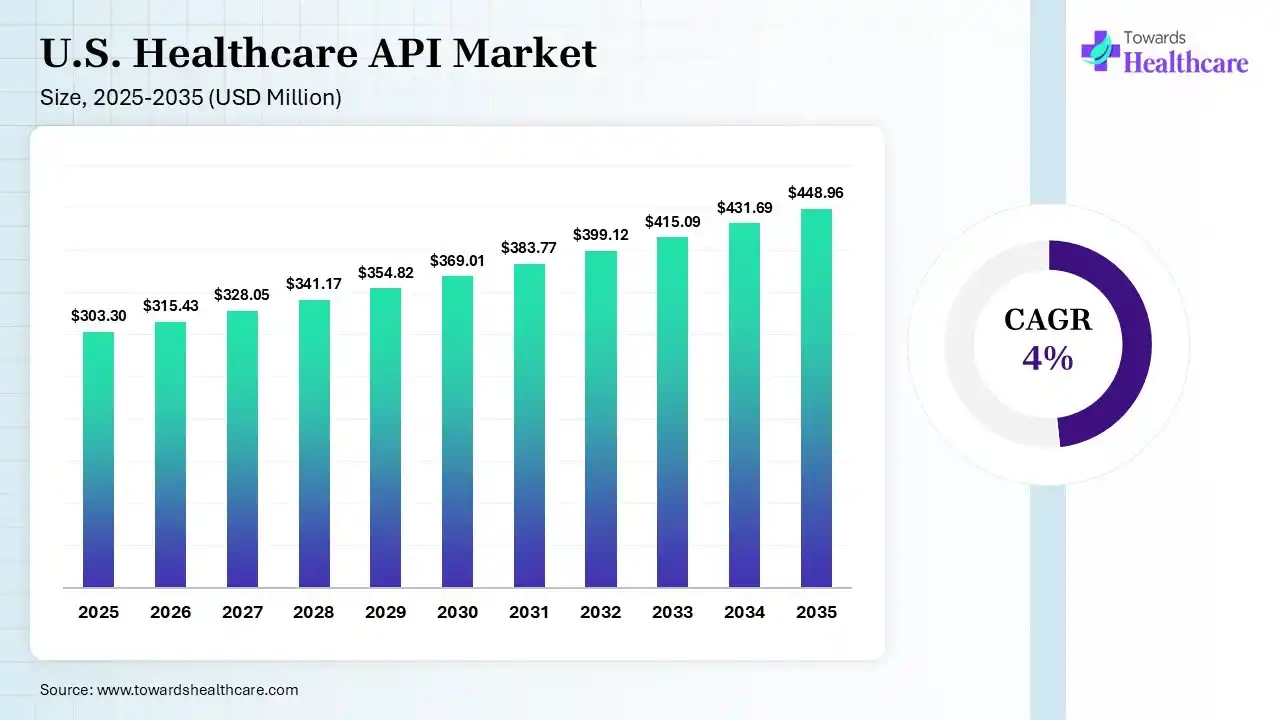
The U.S. healthcare API refers to the digital platforms or software utilized to exchange healthcare information securely. The federal government has made API connectivity a legal requirement, which is a major reason for its growth, where non-compliance escalates financial penalties. Furthermore, the introduction of the 21st Century Cures Act, the ONC Information Blocking rule, and the CMS Interoperability and Prior Authorization Final Rule (CMS-0057-F) are setting compliance deadlines with a specific date attached to them: January 1, 2027. Thus, these regulatory mandates and new federal rules are accelerating the adoption of healthcare API across the U.S., irrespective of their commercialization.
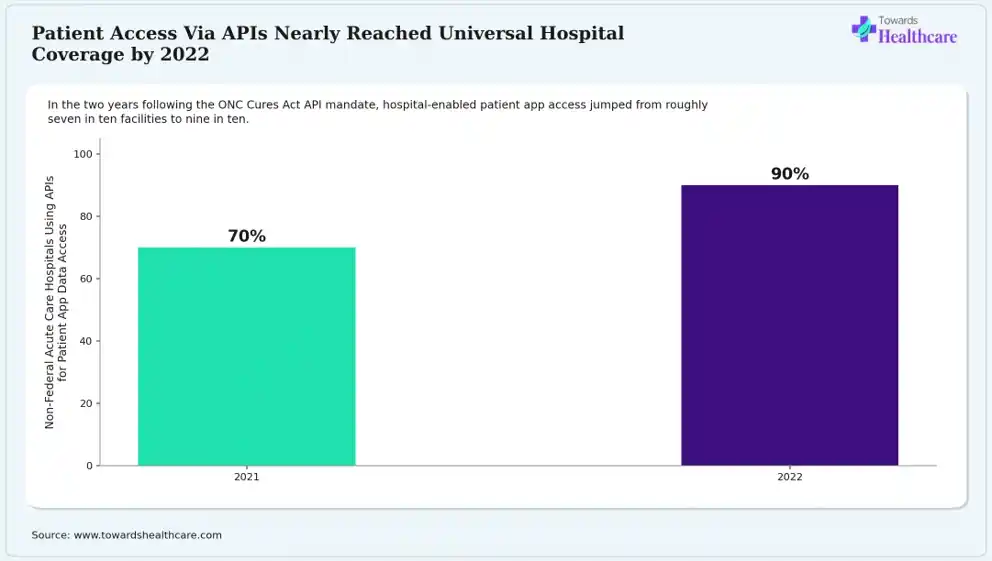
Graph 1: As the market research analyst, I interpret that the graph represents the growth in patient access in 2022. Based on the ONC/ASTP data brief findings, the non-federal acute care hospitals using APIs to offer patients app-based access to their EHR data increased to 90% in 2022 from 70% in 2021.
Key Insight:
The growth in hospital coverage in just one year contributes to the Cures Act API mandate, which helped achieve these heights and set a de facto floor below which no hospital can fall without inviting information-blocking scrutiny.
Source: ONC/ASTP Data Brief, “Hospital Use of APIs to Enable Patient and Provider Access,” citing 2020 and 2022 AHA Health IT Supplements.
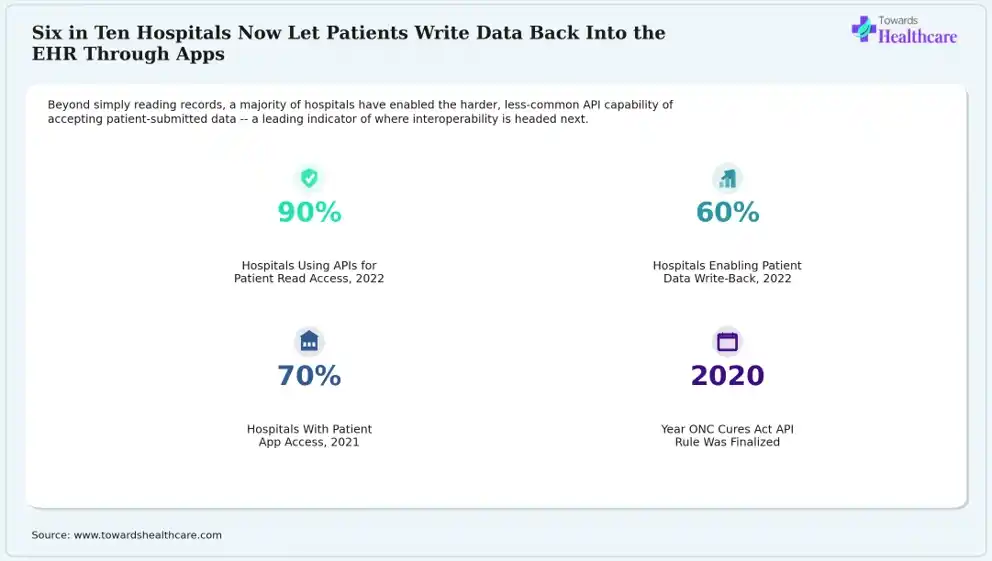
Graph 2: The given infographic stat panel covers hospitals offering apps to the patient for writing data back into the EHR systems to enhance workflow efficiency and improve remote patient monitoring. It indicates that 60% of hospitals in 2022 offered APIs to allow patients to submit data, such as patient-generated health data, back into the EHR with the use of third-party apps.
Key Insight:
Read access contributed to 90%, while write-back adoption was reported to be 60%, which led to a 30-point gap, making it the clearest quantified measure responsible for increasing complexities in bidirectional data exchange implementation than one-way data sharing.
Source: ONC/ASTP Data Brief, “Hospital Use of APIs to Enable Patient and Provider Access,” 2022 AHA Health IT Supplement data.
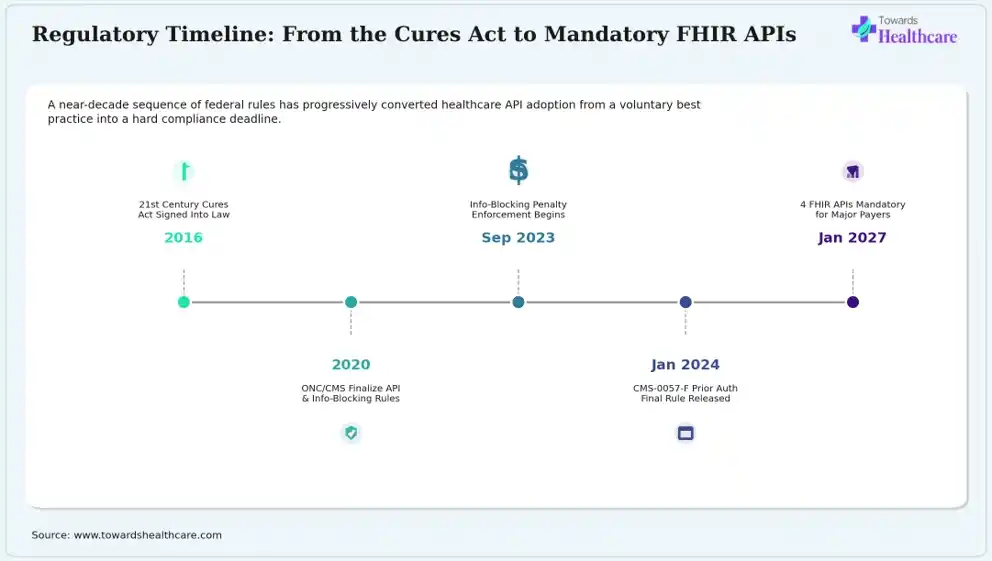
Graph 3: The timeline infographic illustrates evolving regulations for healthcare APIs from 2016 to 2027. It highlights five federal milestones in eight years, where 2016 introduced the Cures Act, followed by 2020, which enforced ONC/CMS final rules for API requirements. In September 2023, information-blocking penalty enforcement was initiated, where January 2024 release of CMS-0057-F, while January 2027 is anticipated to introduce a deadline for four mandatory FHIR APIs.
Key Insight:
The evolving regulations are closing a loophole left by previous regulations such as 2020 created the API requirement, 2023 added real financial teeth to enforcement, and 2024's CMS-0057-F extended the mandate from providers to payers, enhancing sequential regulatory strategies.
Source: CMS.gov, “CMS Interoperability and Prior Authorization Final Rule (CMS-0057-F)” fact sheet; HHS OIG, “Information Blocking” enforcement page.
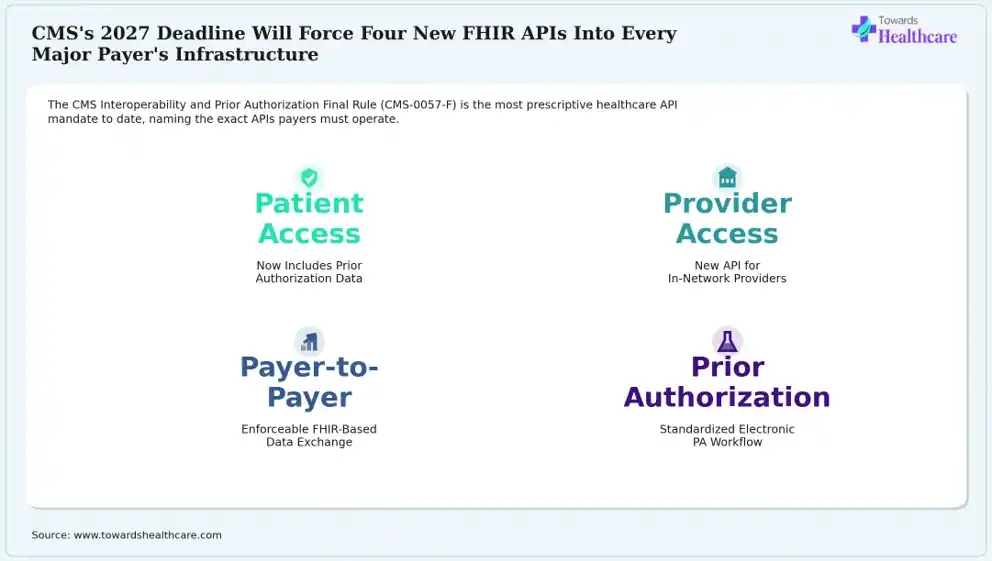
Graph 4: Based on the information gathered, the infographic stat panel highlights four new FHIR APIs introduced by CMS’s 2027 deadline. The four specific APIs, namely an enhanced Patient Access API, a new Provider Access API, an enforceable Payer-to-Payer API, and a new Prior Authorization API, will be introduced by CMS-0057-F that offer Medicare Advantage, Medicaid, CHIP, and federal exchange plans and are expected to be operational before January 2027.
Key Insight:
CMS-0057-F helps convert payer-to-payer data exchange from the unenforced suggestion into Backend Services Authorization-secured, FHIR-based, enforceable infrastructure by covering the biggest loophole used by payers to avoid true data portability.
Source: CMS.gov, “CMS Interoperability and Prior Authorization Final Rule (CMS-0057-F)” fact sheet, 2024.
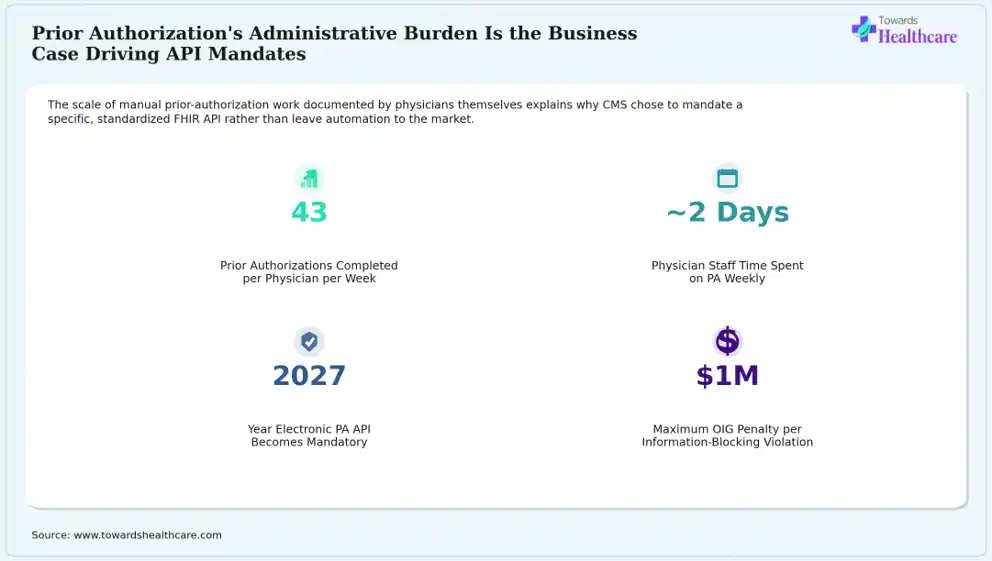
Graph 5: The above-mentioned infographic stat panel illustrates that the growing prior authorization administrative burden acts as the driver for API mandates. The finding of the American Medical Association's Prior Authorization Physician Survey also highlighted that practices complete an average of 43 prior authorizations per physician per week, which consume around two business days of staff time, while the introduction of CMS-0057-F's Prior Authorization API helps in their automation.
Key Insight:
The ability of OIG to impose civil monetary penalties of up to $1 million per information-blocking violation is increasing the financial risk of non-compliance, which now competes with the operational cost of the manual process the API is meant to replace.
Source: American Medical Association, 2023 Prior Authorization Physician Survey; HHS OIG, “Information Blocking” enforcement guidance.
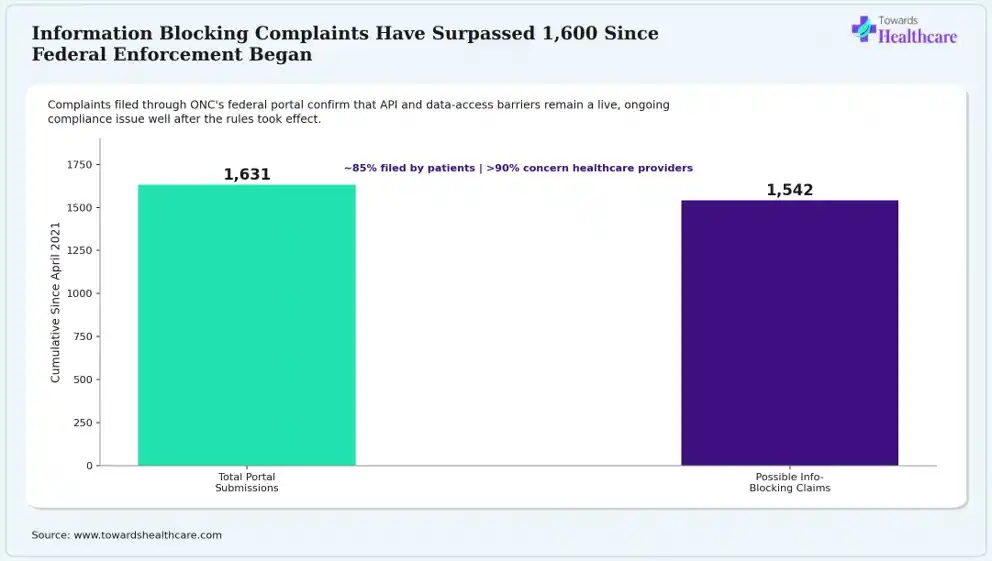
Graph 6: As per the information collected by Aman, the bar chart represents growing information blocking complaints. A total of 1,631 submissions since April 2021 were reported at ONC's Report Information Blocking Portal. Around 1,542 of the complaints were considered possible claims of information blocking and were reported by approximately 85% of patients and more than 90% concerning healthcare providers.
Key Insight:
Enforcement pressure and reputational risk are increasing due to growing information blocking complaints, where the majority of complaints target providers rather than health IT vendors or payers.
Source: ONC/ASTP, “Information Blocking Claims: By the Numbers,” healthit.gov Quick Stats.
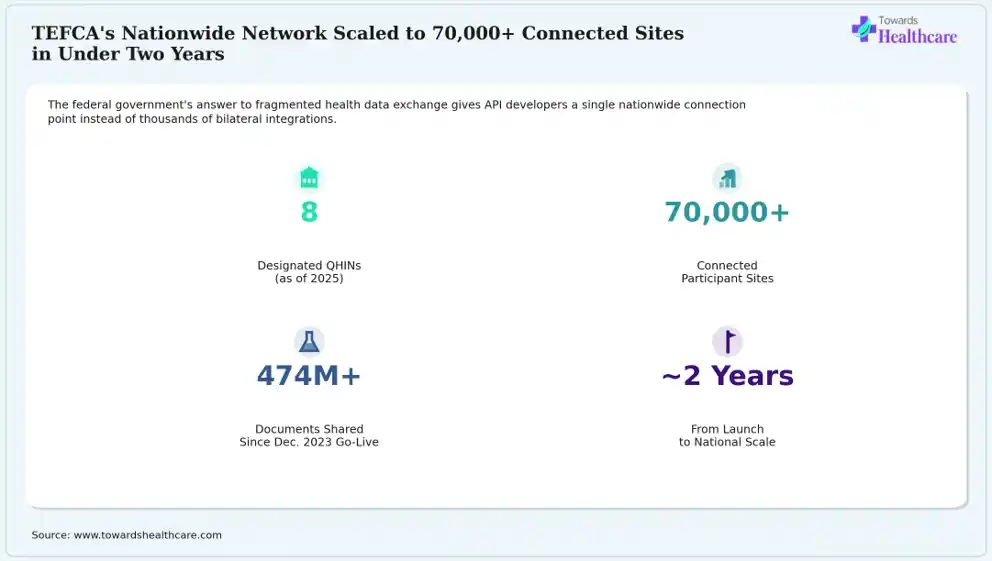
Graph 7: The infographic stat panel represents the expansion of TEFCA’s nationwide network in two years. The total of 8 designated Qualified Health Information Networks (QHINs) connecting more than 70,000 participant sites and supporting over 474 million document exchanges was reported by the Trusted Exchange Framework and Common Agreement, coordinated by The Sequoia Project, which reflected significant growth in just two years since the December 2023 go-live.
Key Insight:
TEFCA gives API developers a single federated connection point, making it the piece of infrastructure responsible for determining whether the 2027 payer API mandates connect smoothly or should be fragmented into another layer of incompatible pipes.
Source: ONC/HealthIT.gov, TEFCA Update Presentation, Feb. 2026; The Sequoia Project (Recognized Coordinating Entity).
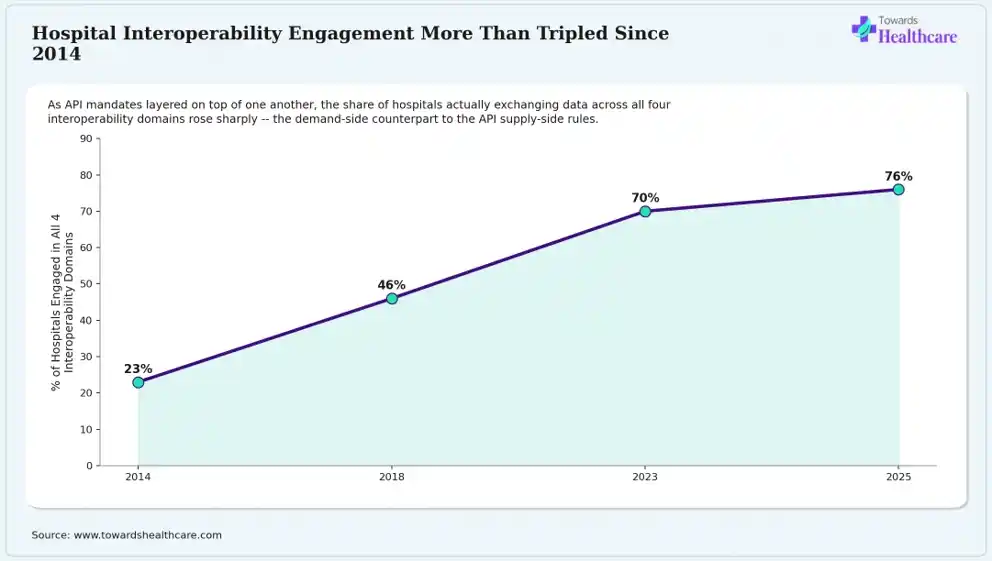
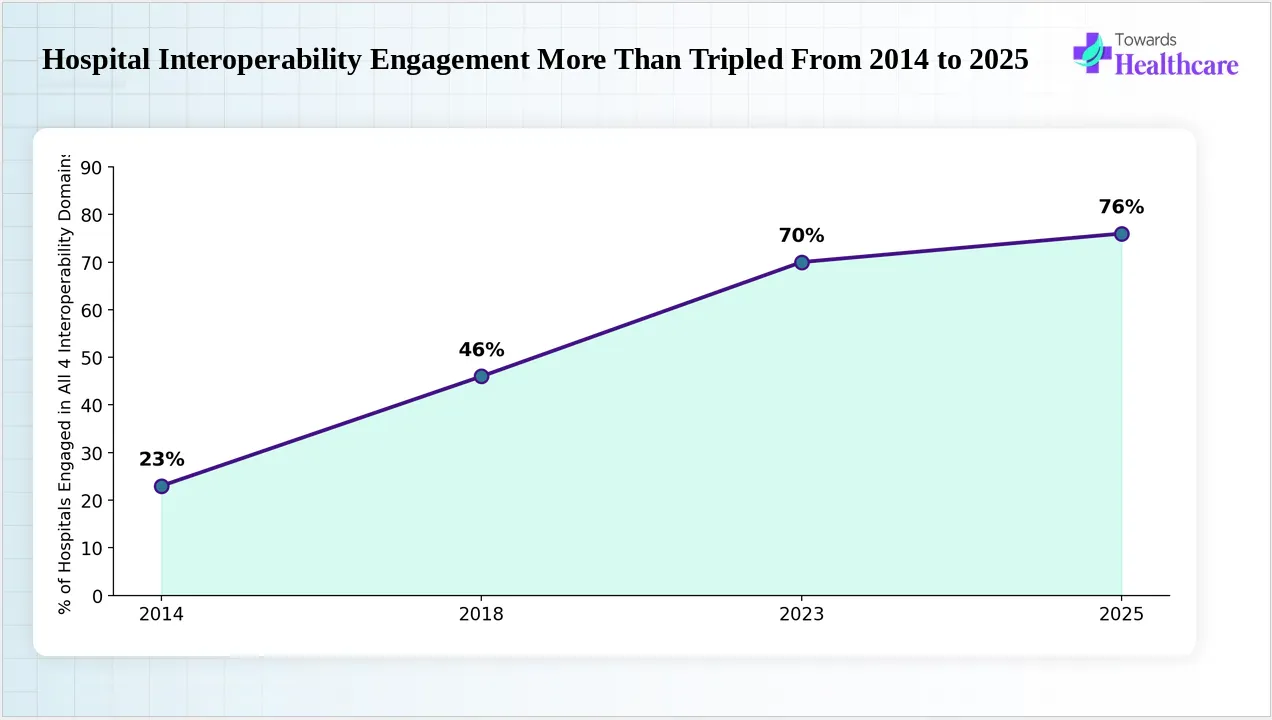
Graph 8: As the market research analyst, I interpret that the growth line chart outlines hospital interoperability engagement, which demonstrates gradual growth. Based on the successive ONC/ASTP data briefs, the share of hospitals engaged in all four ONC-tracked interoperability domains, including send, receive, find, and integrate patient health information, experienced a rise from 23% in 2014 to 76% in 2025.
Key Insight:
The growing API availability and actual interoperability engagement represent mandates that are translating into real clinical workflow change rather than remaining a compliance-driven capability that goes unused.
Source: ONC/ASTP, “Electronic Health Information Exchange by Hospitals” Data Briefs, 2024–2026.
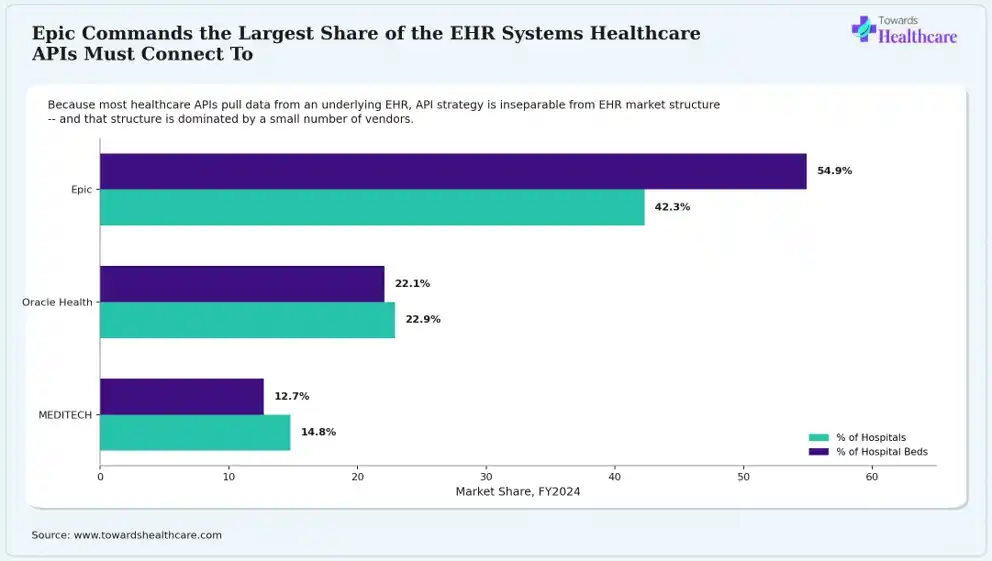
Graph 9: The above-mentioned horizontal bar chart represents the growing use of Epic across EHR systems in healthcare APIs. According to KLAS Research's 2025 U.S. Acute Care EHR Market Share report, Epic dominated the market by contributing to 42.3% of hospitals and 54.9% of hospital beds, while Oracle Health held 22.9% of hospitals and 22.1% of hospital beds, and MEDITECH held 14.8% of hospitals and 12.7% of hospital beds.
Key Insight:
Epic's outsized share of hospital beds indicates that any third-party API platform's practical reach is determined by its performance within a single vendor's ecosystem.
Source: KLAS Research, “U.S. Acute Care EHR Market Share 2025” Report (FY2024 data).
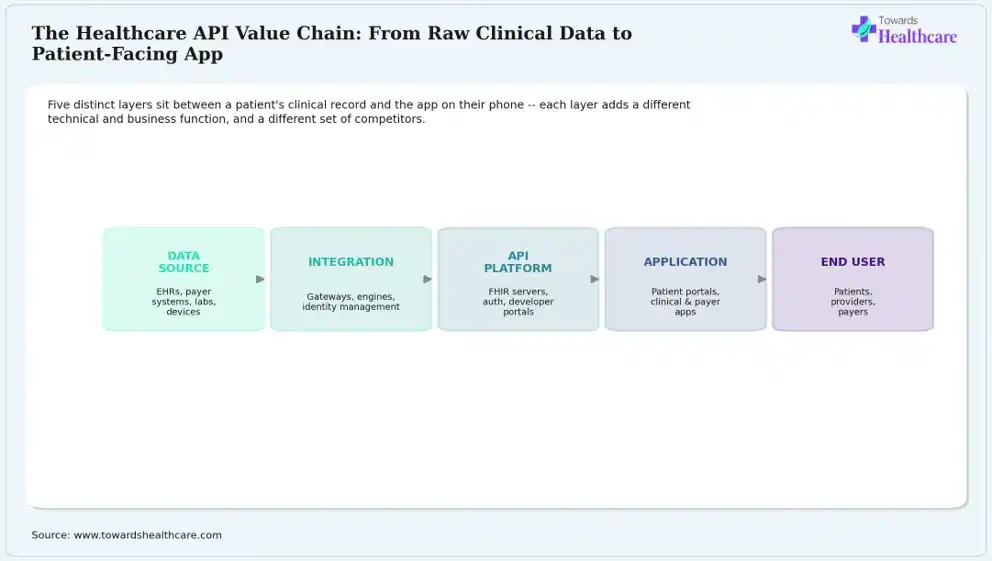
Image 1: Based on information gathered by Aman, the above-mentioned diagram covers the value chain analysis of the U.S. healthcare APIs. The image highlights five functional layers, which are essential as clinical data crosses its way from an EHR to a patient's phone. The functional layers include the data source layer, the integration layer, the API platform layer, the application layer, and the end-user layer.
Key Insight:
Each layer is led by a different competitive set such as data source layer is controlled by EHR vendors, the middle layers are dominated by specialized integration-engine and API-gateway companies, while the end of the chain is under the influence of app developers, which creates opportunities for several distinct markets.
Source: Framework analysis based on standard healthcare API architecture (FHIR/HL7 ecosystem structure), consistent with ONC and HL7 published reference architectures.
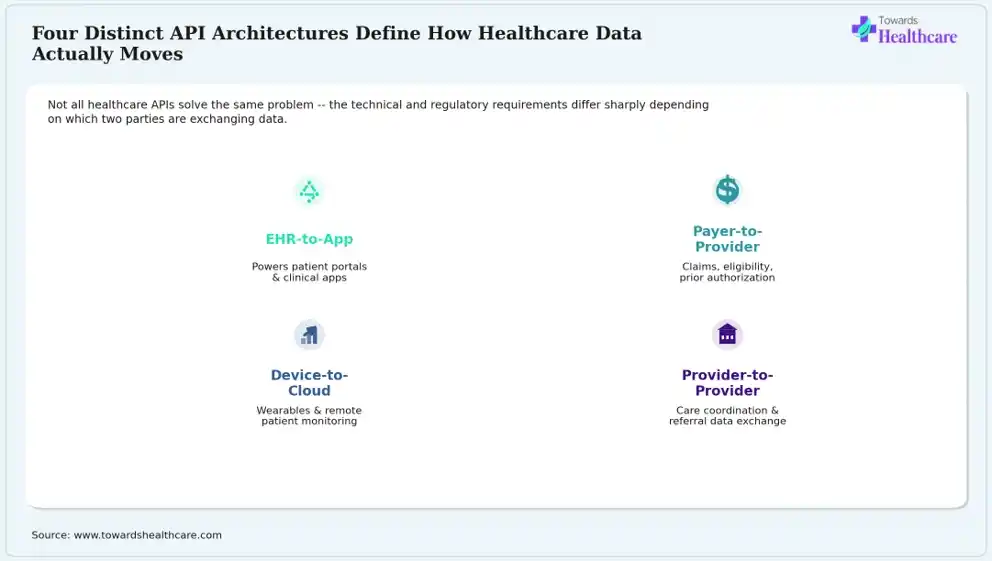
Graph 10: As per my analysis, the infographic stat panel distinguishes four functionally different healthcare API types by which two parties are exchanging data. It includes EHR-to-App, which offers patient portals; Payer-to-Provider, which helps with claims and prior authorization; Device-to-Cloud, are responsible for wearables and remote monitoring; and Provider-to-Provider, which enhances care coordination.
Key Insight:
The growing use of these four architectures is driving regulatory attention, which began with EHR-to-App, mandated in 2020, followed by Payer-to-Provider, mandated in 2024-2027, making the Device-to-Cloud and Provider-to-Provider APIs the most likely next targets for future federal API mandates.
Source: Framework analysis based on ONC/CMS API rule scope and HL7 FHIR use-case categorization.
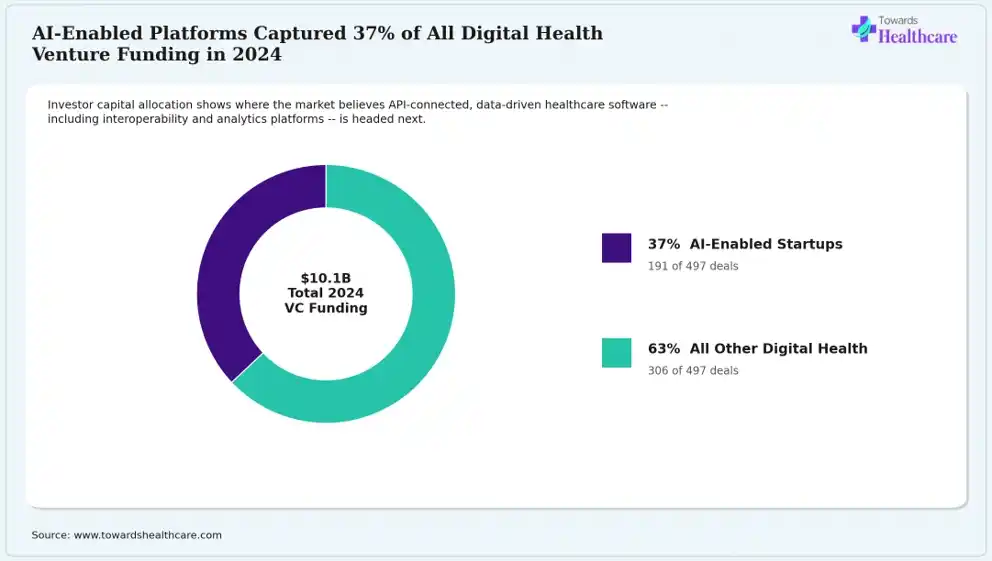
Graph 11: According to our research, the donut chart highlights growing AI-enabled startups' VC funding. The AI-enabled startups captured 37% of U.S. digital health venture funding in 2024, contributing to $10.1 billion, as they closed 191 of 497 total deals.
Key Insight:
AI-enabled platforms are now receiving more than a third of venture capital, attracting investors as many of them depend entirely on API-based access to clinical and claims data to function, even though they are investing in AI application layers.
Source: Rock Health, 2024 Year-End Market Overview: “Davids and Goliaths.”
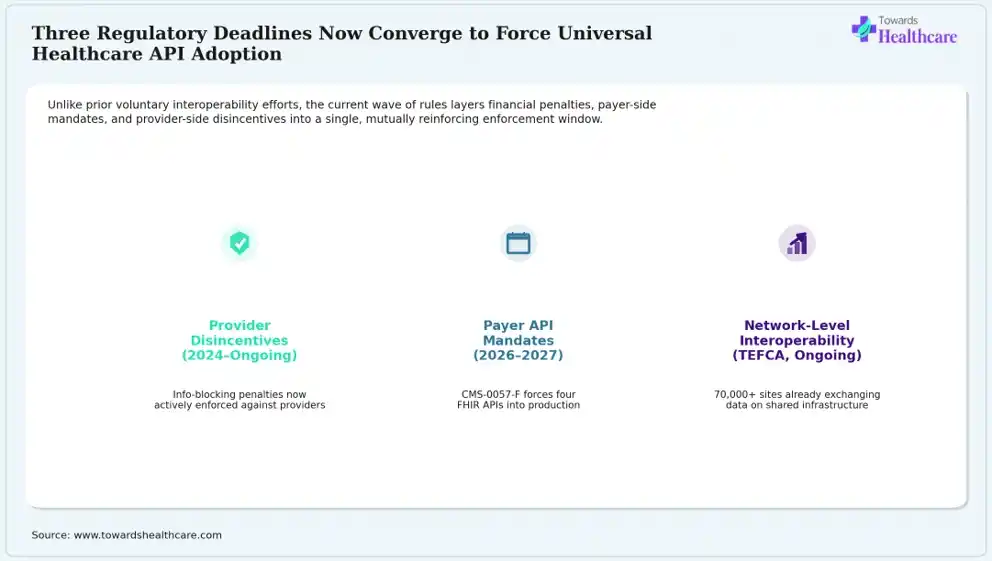
Image 2: As the market research analyst, I interpret that the given image shows three regulatory deadlines driving healthcare API adoption. This regulatory framework focuses on three enforcement mechanisms, including provider-side information-blocking disincentives, which were introduced in 2024 & is still in effect; payer-side FHIR API mandates under CMS-0057-F from 2026 to 2027; and, lastly, the network-level interoperability infrastructure already operating at scale through TEFCA
Key Insight:
These three mechanisms target three different categories such as providers, payers, and the network layer itself, which eliminates the compliance path for healthcare organizations to avoid API investment altogether.
Source: Synthesis of evidence presented in Sections 1–12 of this briefing.
The U.S. healthcare API market consists of six segments such as services, deployment model, end use, API type, organization size, and application. The following section covers market share and CAGR percentages along with real, dated, sourced evidence for each category.
EHR Access Segment Dominates the Market with 29.76% in 2025
| Service Category | Verified Data Point | Source |
| EHR Access | 2022 recorded 90% of hospitals utilized APIs for patient EHR read access, and 60% enabled write-back | ONC/ASTP Data Brief, AHA Health IT Supplement 2022 |
| Payment | CMS-0057-F mandates and encourages the use of the Prior Authorization API and expanded Patient Access API covering claims/payment data, which are effective from Jan. 2027 | CMS.gov, CMS-0057-F Fact Sheet, 2024 |
| Remote Patient Monitoring | No single authoritative national API-transaction-volume figure is publicly available for this category specifically | Data gap stated explicitly rather than estimated |
| Wearable Medical Device | In 2018, Apple's Health Records API was noted to have scaled from 12 to more than 500 connected hospitals in just six months, which established the first large-scale patient-facing EHR-to-app integration pattern | Apple Newsroom, June 2018; Healthcare Dive, 2018 |
| Appointments | No single authoritative national API-adoption figure specific to scheduling APIs is publicly available | Data gap stated explicitly rather than estimated |
Table 1: The table illustrates that the EHR Access segment dominated the market with 29.76%, as hospitals utilized API for their access. The remote patient monitoring segment is expected to expand rapidly with 5.7% CAGR, while the appointments segment is growing significantly at 18.42%. The payment segment is growing considerably at 15.31%, while the wearable medical device segment shows lucrative growth at 17.43%
Cloud-Based Segment Leads the Market with 72.84%
The cloud-based segment held the major share of 72.84% in the market and is expected to show the highest growth with a CAGR of 4.2% during the predicted period, as it provides scalable infrastructure for API-intensive healthcare workloads, while the on-premise segment is anticipated to grow significantly at 27.16%. Moreover, the federal API mandates specify that the API and data standard must be supported by payers or providers as part of their own IT strategy rather than driven by regulation.
Healthcare Providers Segment Held Dominant Share of 46.72% of the Market
| End-Use Category | Verified Data Point | Source |
| Healthcare Providers | Hospitals engaged in all 4 ONC-tracked interoperability domains recorded a rise from 23% in 2014 to 76% in 2025 | ONC/ASTP Data Briefs, 2024–2026 |
| Healthcare Payers | CMS-0057-F directly mandates 4 FHIR APIs for Medicare Advantage, Medicaid, CHIP, and federal exchange plan payers | CMS.gov, CMS-0057-F Fact Sheet, 2024 |
| Patients | Significant growth from approximately 70% in 2021 to 90% in 2022 was reported as hospitals enabled patient API-based data | ONC/ASTP Data Brief, 2022–2023 |
Table 2: Our research indicates that the healthcare providers segment dominated the market with 46.72%, due to growth in engagement with all 4 ONC-tracked interoperability domains. The patients segment held a 4.7% share and is anticipated to show the fastest growth during the forecast period, while the healthcare payers segment is significantly growing with a 31.18% market share.
Clinical Data APIs Segment Contributed to 34.26% of Market Share
| API Type | Verified Data Point / Regulatory Status | Source |
| Clinical Data APIs (EHR/EMR) |
Core requirement of the original 2020 ONC Cures Act API rule Contributes to 90% hospital patient-access adoption figure |
ONC/ASTP Cures Act Final Rule, 2020 |
| Administrative & Financial APIs | Directly mandated by CMS-0057-F, which focuses on prior authorization API and enhanced patient access API covering claims data, by Jan. 2027 | CMS.gov, CMS-0057-F Fact Sheet, 2024 |
| Patient Engagement APIs | Highlight growth in the use of the patient-facing app by the 90% hospital API-access figure, which was historically pioneered by Apple's Health Records API, contributing to more than 500 hospitals by mid-2018 | ONC/ASTP, 2022–2023; Apple Newsroom, 2018 |
| Device & IoT APIs | No single authoritative current national adoption figure specific to this category is publicly available | Data gap stated explicitly rather than estimated |
| Imaging & Diagnostic APIs | No single authoritative current national adoption figure specific to this category (e.g., DICOM-based APIs) is publicly available | Data gap stated explicitly rather than estimated |
Table 3: Based on the information gathered, the clinical data APIs segment held the largest share of 34.26% of the market in 2025, as it was the core regulatory requirement. The administrative & financial APIs segment held the second-largest share of 23.14%, followed by the patient engagement APIs segment with 18.73%. The imaging & diagnostic APIs segment also held 10.3% market share, while the device & IoT APIs segment held 5.3% and is expected to show rapid expansion during the predicted period.
Large Enterprises Segment Held Major Revenue Share of 61.84%
The large enterprises segment led the market with 61.84% as it operated complex technology environments requiring extensive integration. The mid-sized organizations segment held the second-largest share of 25.47%, whereas the small & medium-sized organizations segment is anticipated to expand rapidly with a 12.69% CAGR during the upcoming years. Furthermore, it is reported that CMS-0057-F applies uniformly, regardless of payer size, to all organizations with the same deadlines, although an extended timeline is provided to state Medicaid/CHIP fee-for-service programs due to their smaller/more constrained technical capacity.
Source: CMS.gov, CMS-0057-F Final Rule text, 2024 (state Medicaid/CHIP extended compliance timeline).
Interoperability & Data Exchange Segment Registered Dominance Over the Market with 27.64%
| Application Category | Verified Data Point | Source |
| Interoperability & Data Exchange | TEFCA scaled to more than 70,000 connected sites and beyond 474M documents shared within approximately 2 years from December 2023 to date | ONC/HealthIT.gov TEFCA Update, Feb. 2026 |
| Patient Access & Engagement | By 2022, 90% of hospitals offered patient API-based data access, while 60% enabled write-back | ONC/ASTP Data Brief, 2022–2023 |
| Revenue Cycle & Payer Operations | Growth in Prior Authorization API to address a documented burden of 43 PA requests per physician per week to comply with CMS-0057-F mandates | CMS.gov, 2024; AMA 2023 Prior Authorization Physician Survey |
| Telehealth & Virtual Care | In 2024, 25% of fee-for-service beneficiaries stabilized Medicare telehealth at approximately five times the pre-pandemic baseline | CMS, Medicare Telehealth Trends Report, 2024 |
| Digital Health & Connected Devices | Growth in AI-enabled digital health platforms increased adoption of many API-dependent devices, contributing to 37% of 2024's $10.1B in U.S. digital health VC funding | Rock Health, 2024 Year-End Market Overview |
| Care Management | No single authoritative national API-adoption figure specific to care-coordination APIs is publicly available | Data gap stated explicitly rather than estimated |
| Healthcare Analytics | No single authoritative national API-transaction figure specific to analytics APIs is publicly available | Data gap stated explicitly rather than estimated |
Table 4: The above-mentioned table shows that the interoperability & data exchange segment dominated the market with 27.64% due to the expansion of connected sites and data sharing. The patient access & engagement segment held the second-largest share of the market with 18.52%, where the care management segment was its closest competitor with 16.84% market share. The telehealth & virtual care segment is expected to show significant growth with 4.80% CAGR during the forecast period, while the revenue cycle & payer operations segment held an 11.92% share in 2025. Furthermore, the healthcare analytics segment held 6.91% of the market, while the digital health & connected devices segment is anticipated to grow at the fastest CAGR of 4.44% during the prediction time.
January 17, 2024, Centers for Medicare & Medicaid Services (CMS) introduced the Interoperability and Prior Authorization Final Rule (CMS-0057-F), making payer-to-payer data exchange an enforceable requirement, which helped directly target the prior authorization process.
Source: CMS.gov, “CMS Interoperability and Prior Authorization Final Rule (CMS-0057-F)” fact sheet, 2024.
June 24, 2024, HHS Office of Inspector General (OIG) finalized its information blocking disincentives rule for healthcare providers, penalizing health IT vendors and networks found to have committed information blocking, and highlighted that more than 90% of information blocking complaints filed involved providers, which helped close the highest-impact enforcement gap.
Source: Holland & Knight, “HHS Is Primed to Enforce Information Blocking Conduct,” June 2024.
March 26, 2024, CMS highlighted implementation timelines for CMS-0057-F, which shifted to a staggered 2026/2027 timeline and offered payers and their API vendors a firm, government-confirmed build timeline rather than a moving target.
Source: CMS.gov, CMS Interoperability and Prior Authorization Final Rule presentation, March 26, 2024.
2025, KLAS Research released the "U.S. Acute Care EHR Market Share 2025” report, which confirmed Epic held the largest annual net gain of 176 hospitals in 2024 and 54.9% of hospital beds. It also highlighted the underlying EHR data-source layer essential for integration, enhancing the practical importance of Epic-specific API compatibility.
Source: KLAS Research, “U.S. Acute Care EHR Market Share 2025” Report.
2025–2026, The Sequoia Project/TEFCA confirmed its expansion beyond 70,000 connected participant sites and over 474 million documents shared since its December 2023 go-live, which helped TEFCA promote genuine national-scale infrastructure in roughly two years. It also supported the development of bilateral integrations with thousands of individual health systems and payers.
Source: ONC/HealthIT.gov, TEFCA Update Presentation, Feb. 2026.
May 2024, ONC/ASTP reported 1,052 total complaints received since April 2021, which confirmed a steady rise in complaint volume, indicating it as the active, unresolved friction point, sustaining pressure for further API investment.
Source: ONC/ASTP, “Information Blocking Claims: By the Numbers,” healthit.gov Quick Stats.
It is the largest U.S. EHR Vendor, operating App Orchard API and covering 42.3% of hospitals and 54.9% of hospital beds.
It is the second-largest EHR vendor, integrating Oracle Cloud API infrastructure and serving 22.9% of hospitals.
It is the third-largest EHR vendor with a strong legacy hospital base requiring API modernization and covering 14.8% of hospitals
It is the federal regulator and author of CMS-9115-F (2020) and CMS-0057-F (2024), which are the two defining payer-side API mandates.
It is the federal regulator that published the Cures Act API and Information Blocking final rules responsible for operating the national compliant portal.
It is the federal enforcement body implementing information blocking penalties, and it contributed to imposing $1 million per violation against health IT players.
It is the interoperability governance body, recognized as the coordinating entity operating TEFCA, which is the national API/data-exchange framework.
It is the standards body which publishes and maintains the FHIR standard essential for every API mandate.
It is the professional association publishing the annual Prior Authorization Physician Survey, which quantifies the administrative burden CMS-0057-F targets.
It is an independent research firm that publishes an authoritative annual U.S. Acute Care EHR Market Share report useful for sizing the underlying EHR data-source layer.
It is a venture research firm publishing leading annual U.S. digital health venture funding data, such as AI/API-platform funding share.
Aditi is a healthcare IT research expert with strong experience in digital health tools, EHR systems, and AI platforms markets. She conducted detailed market research, analyzed company data, clinical trends, and industry developments. Based on her comprehensive analysis, the following strategic key takeaways highlight the most important market insights and opportunities.
For Service Providers
For Pharma Sponsors
For Investors & Corporate Strategy Teams
Based on my assessment, the market is expected to show significant growth due to growing regulatory mandates, which drive the adoption of healthcare APIs. The growth in funding and investments are also increasing their innovations and adoption rates. The advancements in cloud-based platforms and write-back capabilities are also driving the market expansion. I also anticipate that growing collaborations, focus on interoperability, and shift to remote patient monitoring will also create new market opportunities.
Payal Rabde led the primary market research, developed the methodology, analyzed trends, segmentation, competition, forecasts, and strategic opportunities, forming the report's analytical foundation.
Aman was responsible for collecting and validating clinical trial data, research publications, company information, partnerships, and other quantitative datasets, strengthening evidence-based analysis and market estimations.
Aditi reviewed the complete research document, performed quality checks, validated findings, refined content, corrected inconsistencies, and finalized the report, ensuring accuracy, clarity, credibility, and publication-ready quality.
By Services
By Deployment Model
By End Use
By API Type
By Organization Size
By Application
The payer services and revenue cycle & payer operations applications are the major care settings generating the highest prior authorization API transaction volume, where making payer-to-payer data exchange an enforceable requirement and controlling the rise in complaint volume, which sustain pressure for further API investment, are prioritized by the API infrastructure.
Speak with a healthcare analyst about your research, consulting, or platform needs.




 sales@towardshealthcare.com