
Find the Right Market Report
Search thousands of industry reports, market insights, and research studies in one place.
Search thousands of industry reports, market insights, and research studies in one place.
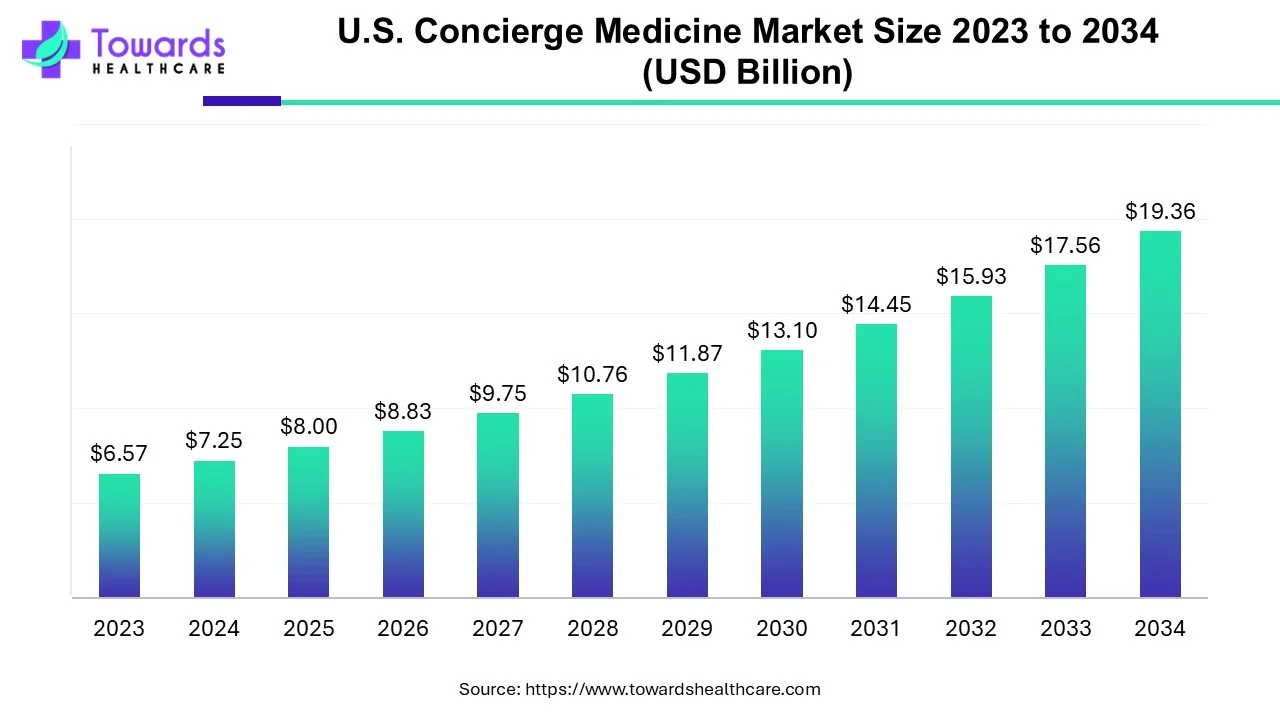
The U.S. concierge medicine market size is calculated at USD 7.25 billion in 2024, grew to USD 8 billion in 2025, and is projected to reach around USD 19.36 billion by 2034. The market is expanding at a CAGR of 10.36% between 2025 and 2034. The growing demand for personalized care and technological advancements drive the market.
Concierge medicine is a practice in which a patient pays an annual fee to a healthcare professional. This helps manage the relationship between a patient and the primary care physician, enabling them to provide enhanced care and greater access. It minimizes paperwork and bureaucracy as healthcare professionals attend to a limited number of patients, providing personalized care. There are generally three concierge medicine models: the Fee for Care (FFC), the Fee for Extra Care (FFEC), and hybrid models. FFC refers to paying an annual, quarterly, or monthly fee to the physician, while FFEC refers to a model in which additional services are charged to Medicare.
The market for concierge medicine is experiencing significant growth due to a variety of factors. The rising incidences and prevalence of chronic disorders and communicable diseases necessitate patients to visit the doctor more frequently. The increasing healthcare expenditure and favorable regulatory policy boost the market. The availability of favorable reimbursement policies, including both government and private insurance, favors the market. The advent of advanced technologies enables healthcare professionals to provide personalized care through telecommunication.
| Metric | Details |
| Market Size in 2024 | USD 7.25 Billion |
| Projected Market Size in 2034 | USD 19.36 Billion |
| CAGR (2025 - 2034) | 10.36% |
| Market Segmentation | By Ownership and By Application |
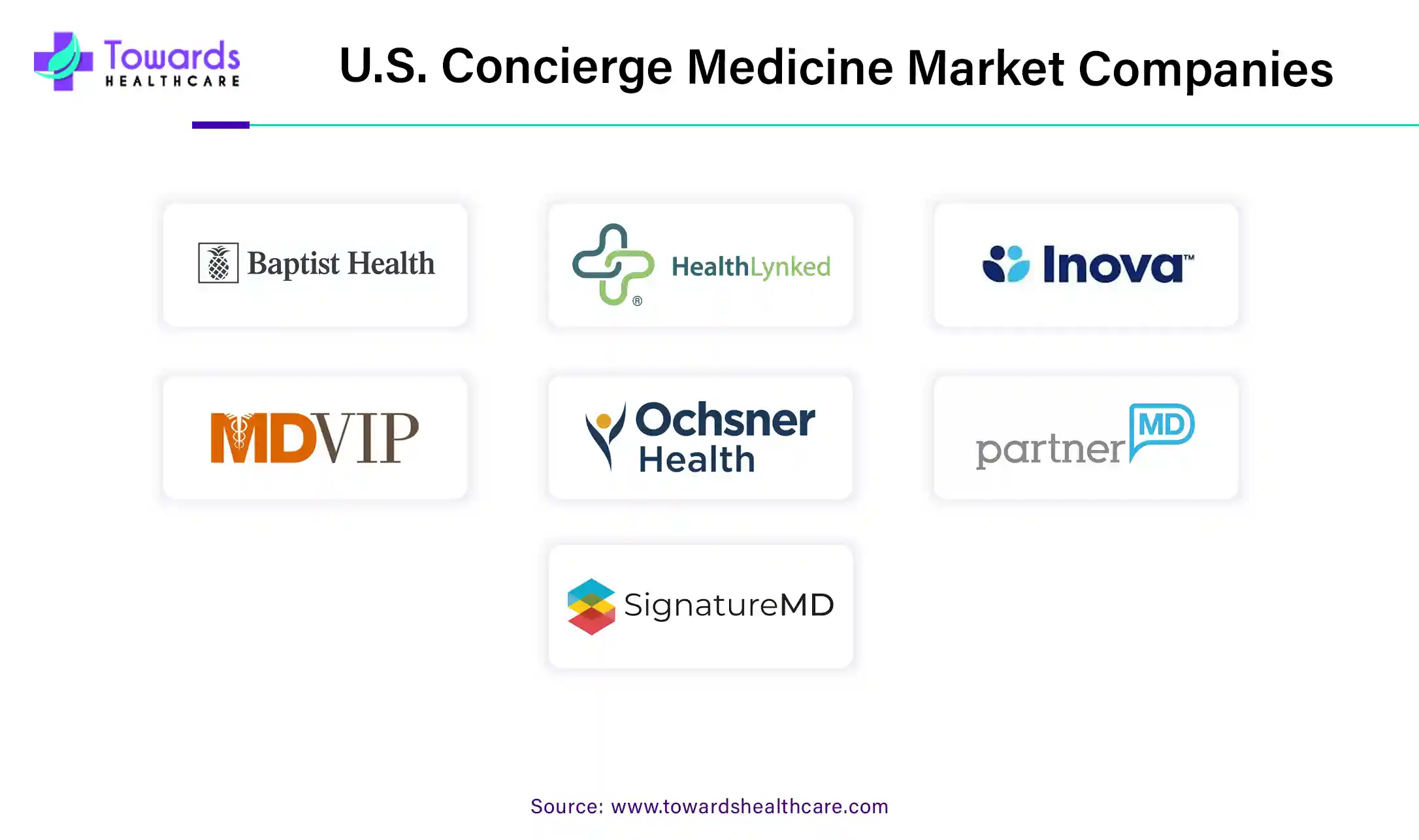
| Top Key Players | Baptist Health Concierge Medicine, Campbell Family Medicine, HealthLynked Corp, Inova 360o Concierge Medicine, MDVIP, Ochsner Health, PartnerMD, Peninsula Doctor Concierge Medicine, Priority Physicians, Inc., SignatureMD, Sollis Health, SpecialDocs Consultants, UC San Diego Health. |
Artificial intelligence (AI) has been proven to disrupt the healthcare sector, increasing treatment accessibility. AI-enabled diagnostics help healthcare professionals to diagnose patients more accurately. It reduces manual errors and leads to precise and reproducible results. AI and machine learning (ML) algorithms can screen a large number of patients and suggest personalized treatment plans. They can also predict patient’s treatment outcomes, enabling doctors to make timely clinical decisions. AI and ML can streamline the administrative tasks in a hospital or clinic. This reduces the overall burden on admin staff. Integrating AI/ML-enabled advanced software tools into concierge medicine can increase productivity and convenience. The advent of telemedicine and remote monitoring has the potential to revolutionize the market. This eliminates the need for patients to physically visit a doctor’s clinic and can skip the waiting room, improving patient flow.
Personalized Care
The major growth factor of the U.S. concierge medicine market is the growing demand for personalized care. Personalized care is a framework that provides individuals with a personal health plan to maximize their health and minimize disease. People are becoming more aware of personalized care as doctors provide highly tailored services. The rising adoption of the Internet and telemedicine allows physicians to provide enhanced care to patients in rural areas. Personalized care increases the accessibility of treatment and enhances patient medication adherence. Favorable government policies facilitate personalized care in the nation. Recently, a bill was presented to expand and improve health savings accounts and other purposes under the Personalized Care Act of 2023.
For instance,
High Membership Cost
The major challenge of the market is the high cost of concierge medicine services. The average fee for membership in a concierge practice is around $1,500 to $2,400 annually or $125 to $200. This limits the affordability of many people from low- and middle-income groups, restricting the number of physicians to care for those who cannot afford it.
Increasing Collaboration
The future of the U.S. concierge medicine market is promising, driven by increasing collaboration among healthcare professionals. Professionals such as nutritionists, mental healthcare specialists, and physical therapists collaborate to provide multidisciplinary expertise to patients. Concierge medicine practices focus on forming a team of healthcare professionals working together to provide patients with the full scale of support. This also helps them to focus more on patient prevention and wellness. Doctors analyze patient’s lifestyles and genetic predispositions and understand their overall health goals. Patients get access to fully customized wellness plans, nutritional guidance, and stress management techniques. Such practices benefit patients by providing enhanced patient experience and improved treatment outcomes. Additionally, it can avoid unnecessary tests or referrals, optimizing resource allocation.
By ownership, the group segment held a dominant presence in the U.S. concierge medicine market in 2024. The group concierge model involves the integration of multiple doctors from diverse disciplines. This provides patients with multidisciplinary expertise and advanced treatment care. The group of doctors charges a membership fee before they attend to a patient. Group services enable healthcare professionals to reduce overhead costs such as administrative costs. Group ownership also allows physicians to increase access to a wide patient population, which is otherwise difficult to achieve single-handedly. Thus, patients receive greater satisfaction with boutique physician care, leading to higher growth potential for physicians.
By ownership, the standalone segment is anticipated to grow with the highest CAGR in the U.S. concierge medicine market during the studied years. Standalone ownership allows healthcare professionals to offer more personalized and advanced care to patients. It enables physicians to better understand a patient’s conditions and health requirements. Doctors can continuously monitor a patient and suggest tailored treatment plans. Advancements in technology help physicians to maintain good relationships with patients.
By application, the primary care segment held the largest share of the U.S. concierge medicine market in 2024. Primary care is a type of the first point of contact for people in need of healthcare services. It includes a wide range of services, from health promotion to disease prevention, treatment, rehabilitation, and palliative care. The growing demand for primary care and awareness of healthy lifestyles promote the segment’s growth. The increasing number of primary care clinics and rising incidences of illnesses also boost the segment’s growth. There were around 123,703 primary care doctors in the U.S. as of 2023, an increase of 0.8% from 2022.
By application, the cardiology segment is expected to grow at the fastest rate in the U.S. concierge medicine market during the forecast period. The rising incidences and prevalence of cardiac disorders require patients to regularly visit the doctor. It is estimated that approximately 6.7 million Americans over 20 years have heart failure, and is predicted to rise to 8.7 million in 2030, 10.3 million in 2040, and 11.4 million by 2050. Concierge cardiologists can provide priority access, ongoing longitudinal relationships, and continuity of care to patients.
The U.S. concierge medicine market is emerging due to a variety of factors. The growing awareness of concierge medicine and technological advancements drive the market. There are currently 12,000 concierge doctors in the U.S. The rising prevalence of chronic disorders augments the market. Around 129 million Americans are estimated to have at least one chronic disorder. The increasing number of physician office visits increases the demand for concierge medicine.
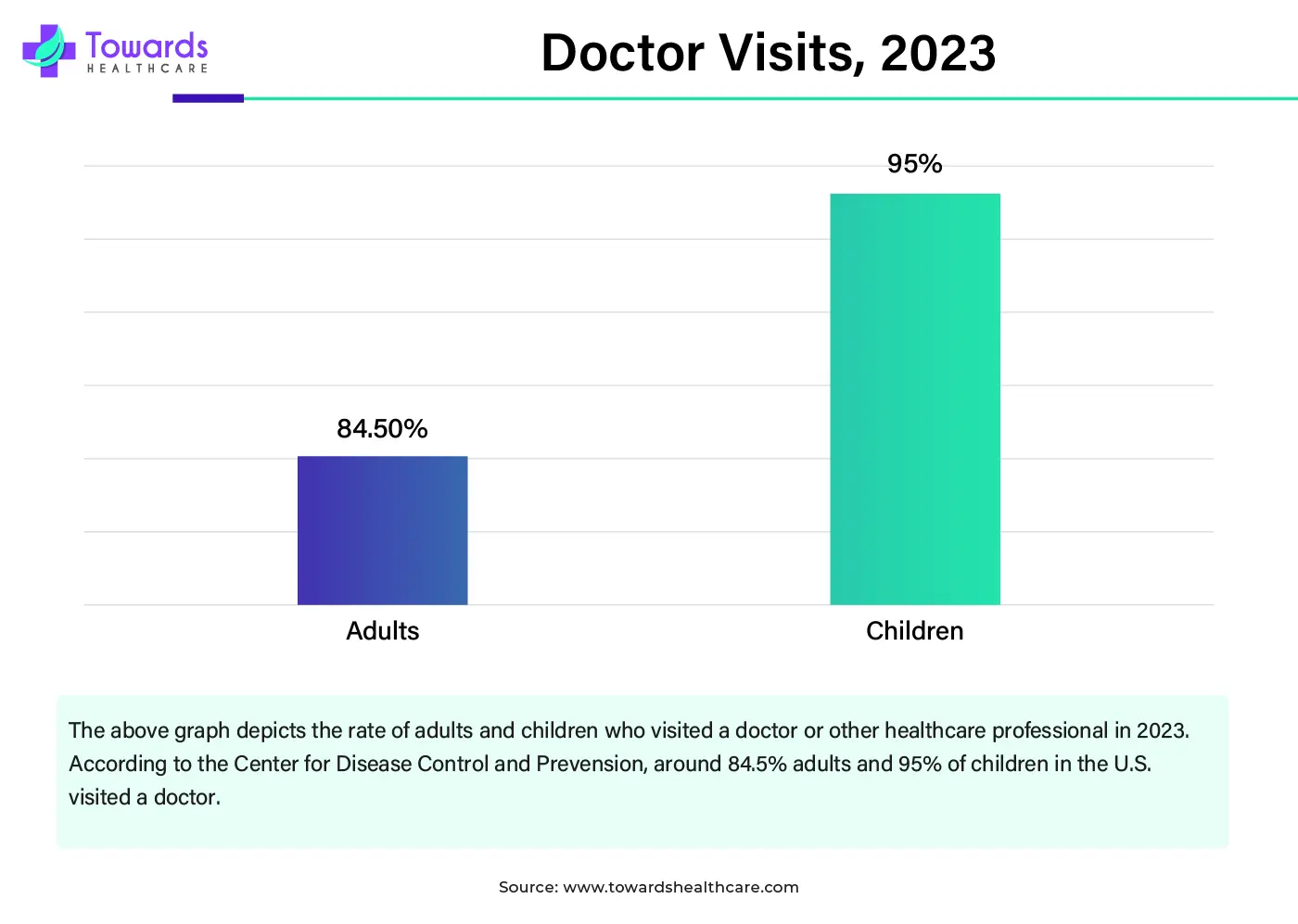
The U.S. reported around 1 billion visits in 2023. Favorable reimbursement policies and rising healthcare expenditures boost the market. Government health insurance companies like Medicaid and Medicare and other private insurance firms cover procedures, prescriptions, and other medical expenses under coverage. The U.S. healthcare spent around $4.9 trillion per person in 2023, an increase of 7.5%. Moreover, advanced healthcare infrastructure and increasing investments propel the market.
Terry Bauer, CEO of SpecialDocs, commented on involving 26 new physician clients in 2024 to its rapidly growing national network of outstanding doctors, that their concierge model consistently delivered to significantly enhance patient experience and transform a physician’s careers with smaller, financially sustainable practices and a genuine work-life balance.
By Ownership
By Application
Speak with a healthcare analyst about your research, consulting, or platform needs.




 sales@towardshealthcare.com