
Find the Right Market Report
Search thousands of industry reports, market insights, and research studies in one place.
Search thousands of industry reports, market insights, and research studies in one place.

Pipeline Programs

CGT Companies Tracked

Manufacturing Facilities
The global personalized cancer vaccine market size was estimated at USD 4.2 billion in 2025 and is predicted to increase from USD 4.99 billion in 2026 to approximately USD 23.32 billion by 2035, expanding at a CAGR of 18.7% from 2026 to 2035. The growing cancer burden globally is increasing the adoption of personalized cancer vaccines. Growing R&D activities, expanding healthcare investments, growing technological advancements, and new vaccine launches are also enhancing the market growth.
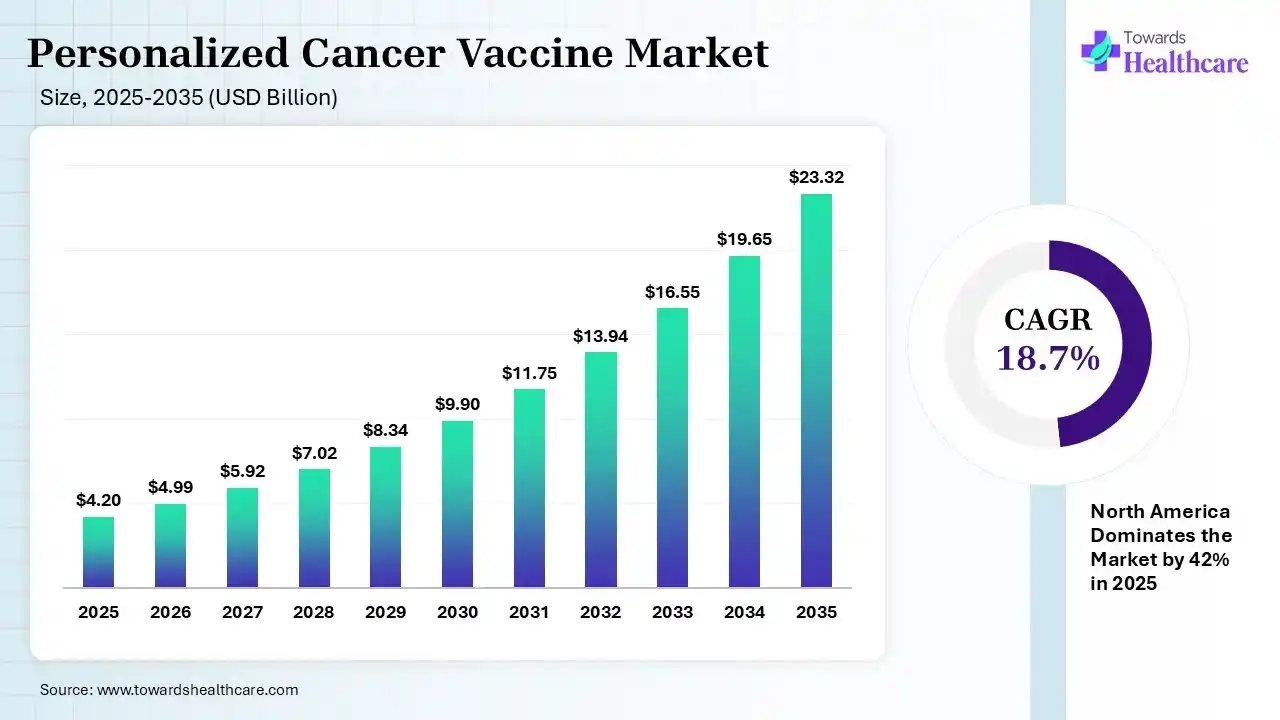
The personalized cancer vaccine market is driven by a shift towards precision medicine and major technological breakthroughs. The personalized cancer vaccine refers to the tailored vaccines designed to stimulate the patient's immune system and target their specific tumors. They are used for the prevention of cancer recurrences and treatment of advanced cancers with target-specific action, improving overall treatment outcomes.
Personalized cancer vaccines are patient-specific immunotherapies designed using an individual’s unique tumor mutations or neoantigens to stimulate the immune system to recognize and eliminate cancer cells with greater precision. The personalized cancer vaccines market is expanding rapidly due to the rising adoption of precision medicine, increasing cancer prevalence, and growing investments in immune-oncology research. Advances in mRNA platforms, next-generation sequencing (NGS), artificial intelligence, and bioinformatics are accelerating vaccine discovery and enabling more accurate neoantigen identification. Growing collaboration between biotechnology companies, pharmaceutical firms, and research institutions is strengthening clinical development and commercialization. Future opportunities lie in expanding application across multiple tumor types, integrating personalized vaccines with checkpoint inhibitors and cell therapies, and improving scalable manufacturing technologies. Favorable regulatory support, increasing clinical trials, and continued innovation in genomics technologies are expected to accelerate market growth further and improve long-term patient outcomes.
The demand for AI in personalized cancer vaccine development is increasing as it helps in the identification of specific tumor mutations. It also helps in selecting the best combination of epitopes driving the development of optimized vaccines, where it also predicts immune responses. It is also being used in biomarker discovery and the prediction of cancer recurrences, driving the optimization of production pipelines and accelerating clinical trials.
Growing Health Awareness
The growing health awareness is increasing the early detection of cancer cases and driving the demand for personalized cancer vaccines, monotherapies, and combination therapies for target-specific action.
Expanding Technologies
The growing technological advancements are driving the development of next-generation platforms, CRISPR, and gene editing, to support the development of safe, stable, and more effective personalized cancer vaccines.
Blooming Applications
The growing advancements in personalized cancer vaccines are driving the development of new combination therapies and biomarker-guided vaccines to prevent recurrence or shrink tumors, promoting their adoption for the treatment of a wide range of cancer types.
| Table | Scope |
| Market Size in 2026 | USD 4.99 Billion |
| Projected Market Size in 2035 | USD 23.32 Billion |
| CAGR (2026 - 2035) | 18.7% |
| Leading Region | North America by 42% |
| Historical Data | 2020 - 2023 |
| Base Year | 2025 |
| Forecast Period | 2026 - 2035 |
| Measurable Values | USD Millions/Units/Volume |
| Market Segmentation | By Vaccine Type, By Cancer Type, By Technology Platform, By Treatment Approach, By End User, By Distribution Channel, By Region |
| Top Key Players | Moderna, BioNTech, Gritstone Bio, CureVac, Transgene, Evaxion Biotech, Nouscom, Nykode Therapeutics, OSE Immunotherapeutics, Geneos Therapeutics |
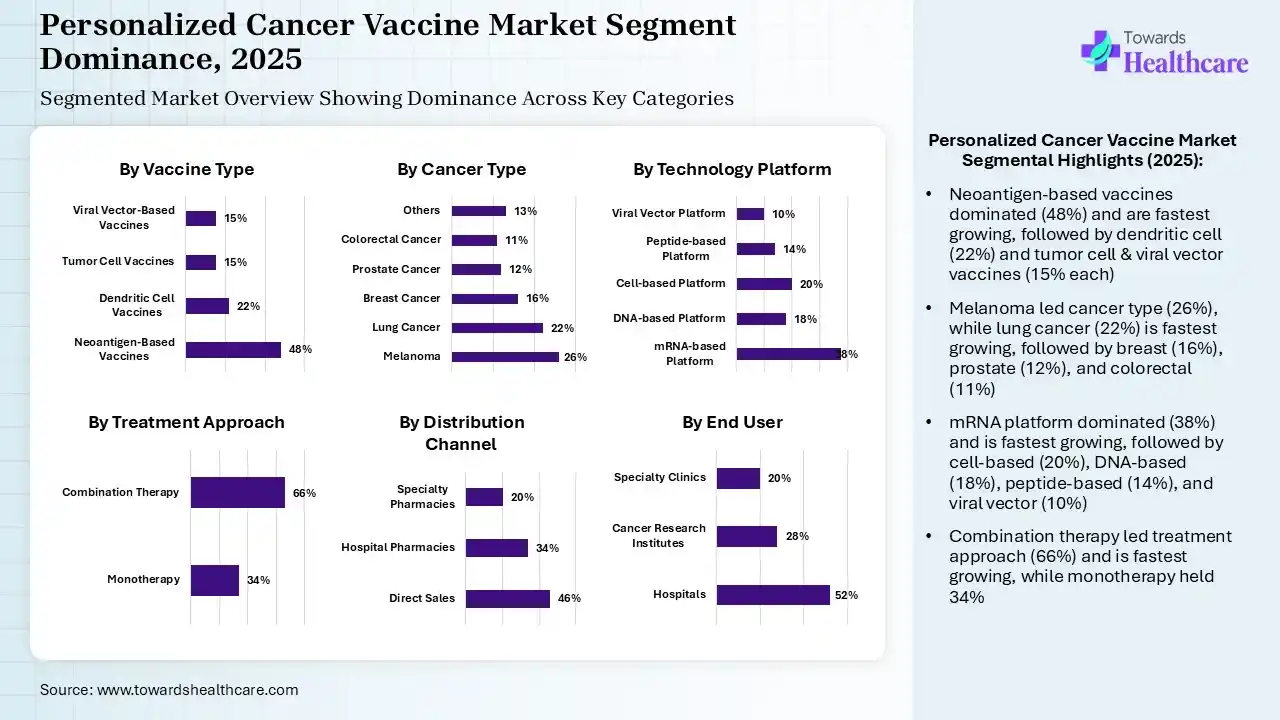
| Segment | Share 2025 (%) |
| Neoantigen-Based Vaccines | 48% |
| Dendritic Cell Vaccines | 22% |
| Tumor Cell Vaccines | 15% |
| Viral Vector-Based Vaccines | 15% |
The Neoantigen-Based Vaccines Segment Dominated the Market With 48% in 2025
The neoantigen-based vaccines segment led the personalized cancer vaccine market with 48% share in 2025 and is expected to grow with the highest CAGR during the forecast period, due to strong pipeline advancements. The growth in the demand for precision medicine has also increased its use. Their enhanced efficacy, offering personalized antigen targeting, also increased their use.
The dendritic cell vaccines segment held the second-largest share of 22% of the market in 2025, driven by their proven immunogenic response. Their expanding clinical trials are also enhancing their scalability. The growing investment in cell therapies is also accelerating their growth.
The tumor cell vaccines segment held 15% of the personalized cancer vaccine market share in 2025, due to their established therapeutic approach, driving steady uptake. Their enhanced effectiveness by broader antigen coverage also promotes their adoption rates. Additionally, their growing integration with combination therapies is also increasing their demand.
The viral vector-based vaccines segment held 15% of the market share in 2025, driven by their efficient gene delivery systems, which enhance immune activation. Growing research funding is also supporting their innovation. Moreover, growing focus on enhancing safety is also driving the advancements in vector engineering.
| Segment | Share 2025 (%) |
| Melanoma | 26% |
| Lung Cancer | 22% |
| Breast Cancer | 16% |
| Prostate Cancer | 12% |
| Colorectal Cancer | 11% |
| Others | 13% |
The Melanoma Segment Dominated the Market With 26% in 2025
The melanoma segment accounted for the highest revenue share of 26% of the personalized cancer vaccine market in 2025, due to high mutation burden, which drives the demand for personalized cancer vaccines. The growth in their clinical success rates also promoted their adoption. Additionally, early regulatory approvals also contributed to their growth.
The lung cancer segment held the second-largest share of 22% of the market in 2025 and is expected to show the highest growth with the fastest CAGR during the forecast period, driven by its rising global incidence rates. This is increasing the use of personalized vaccines, where strong pipeline expansion is also accelerating their innovations. Advancements in biomarker identification are also driving their innovations.
The breast cancer segment held 16% of the personalized cancer vaccine market share in 2025, due to growing R&D activities to tackle the rising incidences. The expanding clinical trials are also driving the early adoption of personalized vaccines. Moreover, improved outcomes with personalized immunotherapy are also increasing their adoption rates.
The prostate cancer segment held 12% of the market share in 2025, driven by growth in cases in the geriatric population. The enhanced effectiveness of Immunotherapy is also driving its adoption. Additionally, improved diagnostics and advancements in combination therapies are also increasing their personalization.
The colorectal cancer segment held 11% of the personalized cancer vaccine market share in 2025, due to high unmet needs. The growing screening rates are also increasing the demand for early intervention. At the same time, increasing research funding is also propelling the development of new personalized cancer vaccines.
| Segment | Share 2025 (%) |
| mRNA-based Platform | 38% |
| DNA-based Platform | 18% |
| Cell-based Platform | 20% |
| Peptide-based Platform | 14% |
| Viral Vector Platform | 10% |
The mRNA-based Platform Segment Dominated the Market With 38% in 2025
The mRNA-based platform segment held a major revenue share of 38% of the personalized cancer vaccine market in 2025 and is expected to expand rapidly with the fastest CAGR during the forecast period, due to its rapid development capability. High efficacy demonstrated in trials also increased their adoption rates. Strong biotech investments also contributed to their increased innovations.
The cell-based platform segment held the second-largest share of 20% of the market in 2025, driven by personalized immune activation, which drives effectiveness. Growing expertise in cell therapy supports their expansion. Rising partnerships are also accelerating their commercialization.
The DNA-based platform segment held 18% of the personalized cancer vaccine market share in 2025, due to its enhanced stability, safety, and long-lasting immunity. Advancements in delivery systems and lower production costs are also increasing their adoption rates. Increasing clinical studies are also driving their growth.
The peptide-based platform segment held 14% of the market share in 2025, due to its improved peptide design, which enhances immune response. Their cost-effective approach also supports wider adoption. Growing research interest is also driving their innovations.
The viral vector platform segment held 10% of the personalized cancer vaccine market share in 2025, driven by strong delivery efficiency, which enhances outcomes. Increasing clinical validation and continuous vector innovations are also increasing their adoption. Proven success rates and strong immune stimulation are also increasing their use.
| Segment | Share 2025 (%) |
| Monotherapy | 34% |
| Combination Therapy | 66% |
The Combination Therapy Segment Dominated the Market With 66% in 2025
The combination therapy segment contributed the biggest revenue share of 66% of the personalized cancer vaccine market in 2025 and is expected to grow with the highest CAGR during the forecast period, due to its enhanced clinical outcomes driven by the synergistic effect. Increased survival rates due to integration with checkpoint inhibitors also increased their acceptance rates. Growth in clinical evidence also increased its widespread adoption.
The monotherapy segment held the second-largest share of 34% of the market in 2025, due to simpler treatment protocols improving patient compliance. Their affordability and early-stage applications are also increasing their adoption rates. Additionally, their growing approval rates are also increasing their adoption.
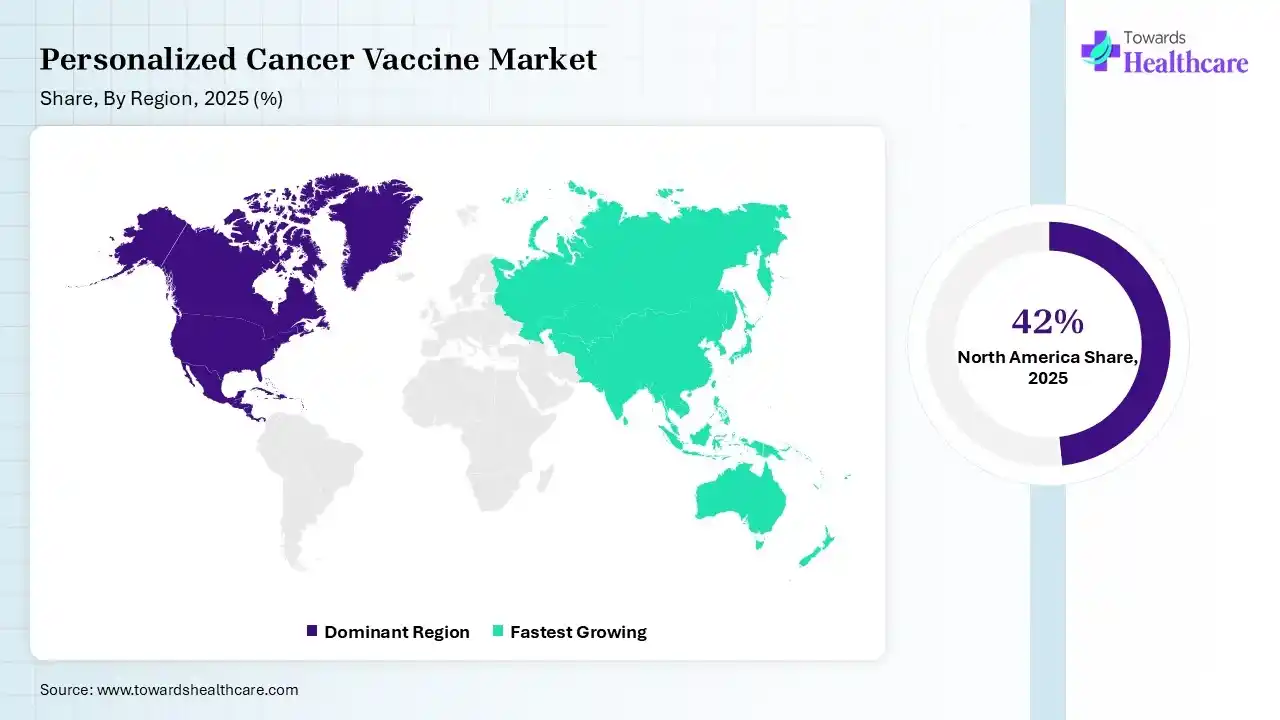
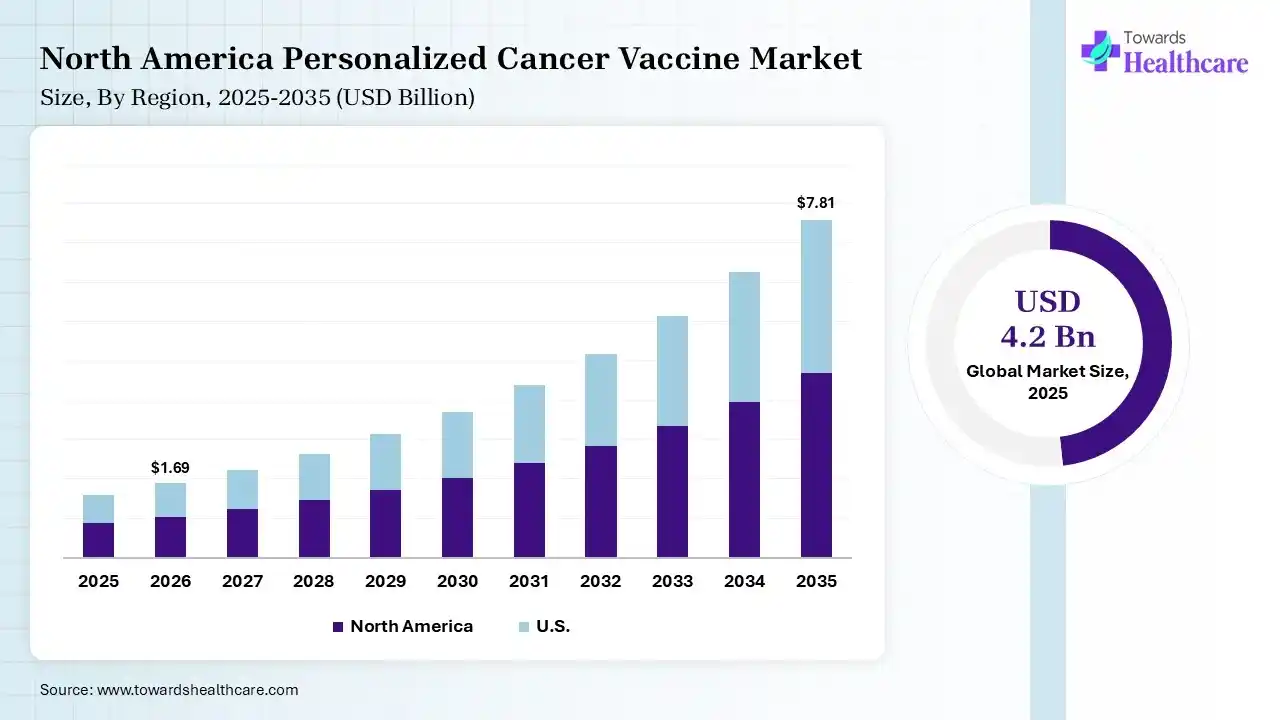
North America dominated the personalized cancer vaccine market with 42% in 2025, due to the presence of a robust biotech ecosystem, which increased personalized cancer vaccine innovations. High healthcare spending and increased cancer cases also increased their adoption rates. Favourable regulatory pathways also accelerated their approvals, which contributed to the market growth.
U.S. Market Trends
The U.S. consists of major biotech firms that accelerate the development of personalized cancer vaccines. Growth in cancer cases also increased their adoption rates. Additionally, high R&D investments, technological advancements, and advanced clinical trial networks are also increasing their innovations.
Canada Strengthens its Leadership in Personalized Cancer Vaccine
Cabada is witnessing significant growth in the personalized cancer vaccine market due to its market due to its strong biotechnology ecosystems, expanding genomics research, and increasing investment in precision oncology. Government funding for cancer research, collaboration between academic institutions and biopharmaceutical between academic institutions and biopharmaceutical companies, and rising clinical trials are accelerating innovation. The adoption of next-generation sequencing (NGS), AI-driven vaccine development, and supportive regulatory initiatives is further strengthening Canada’s position as a leading hub for personalized cancer immunotherapy.
Asia Pacific held 19% share of the personalized cancer vaccine market in 2025 and is expected to grow at the highest CAGR during the forecast period, due to growing cancer incidence, which has increased the adoption of personalized cancer vaccines. Expanding healthcare infrastructure is also increasing its demand. Growing biotech investments also accelerate their growth, which promotes market growth.
China Market Trends
The presence of a large patient population in China is increasing the use of personalized cancer vaccines. Growing government support and rapid biotech expansion are also increasing the innovation of personalized vaccines. High R&D investments, growing patient awareness, and regulatory support are also propelling their adoption and innovations.
India Emerges as a High-Growth Hub for Personalized Cancer Vaccines
India is significantly expanding in the personalized cancer vaccine market due to the rising cancer burden, increasing adoption of precision medicine, and growing investments in biotechnology and genomics. Expanding clinical trials activities, improving next-generation sequencing (NGS) infrastructure, and government support for biomedical research are accelerating innovation. Strategic collaboration between pharmaceutical companies, research institutes, and healthcare providers is further driving the development and accessibility of personalized cancer immunotherapies.
R&D
Clinical Trials and Regulatory Approvals
Formulation and Final Dosage Preparation
Packaging and Serialization
Distribution to Hospitals, Pharmacies
Patient Support and Services
| Companies | Headquarters | Personalized Cancer Vaccines |
| Moderna | Cambridge, U.S. | mRNA-4157 (V940) |
| BioNTech | Mainz, Germany | Autogene cevumeran (BNT122) |
| Gritstone Bio | Emeryville, U.S. | GRANITE |
| CureVac | Tubingen, Germany | CVGB |
| Transgene | Strasbourg, France | TG4050 |
| Evaxion Botech | Horsholm, Denmark | EVX-01 |
| Nouscom | Basel, Switzerland | NOUS-PEV |
| Nykode Therapeutics | Oslo, Norway | VB10.NEO |
| OSE Immunotherapeutics | Nantes, France | Tedopi |
| Geneos Therapeutics | Plymouth Meeting, U.S. | GT-30 |
In February 2026, “mRNA technology is a platform technology. This means it allows us to relatively easily adapt it to a target. We have developed and optimized our technology over decades to make it potent for use in cancer medicine. These characteristics make this technology a pan-tumor technology that is suitable to be used across various tumor types and as a combination partner for novel combination strategies in cancer medicine,” said Precision Medicine, Özlem Türeci, MD, co-founder and chief medical officer at BioNTech and professor of personalized immunotherapy at the Helmholtz Institute for Translational Oncology (HI-TRON), emphasized the flexibility of the platform.
Strengths
Weaknesses
Opportunities
Threats
By Vaccine Type
By Cancer Type
By Technology Platform
By Treatment Approach
By End User
By Distribution Channel
By Region
Speak with a healthcare analyst about your research, consulting, or platform needs.




 sales@towardshealthcare.com