
Find the Right Market Report
Search thousands of industry reports, market insights, and research studies in one place.
Search thousands of industry reports, market insights, and research studies in one place.
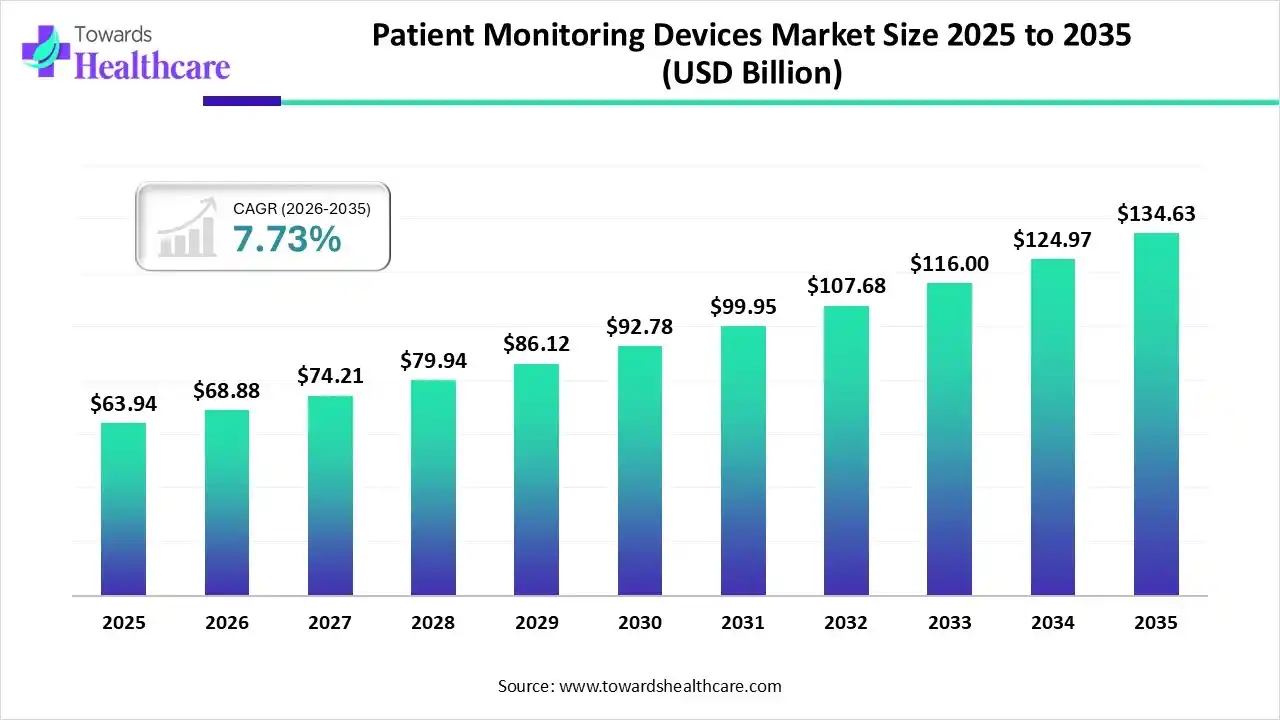
The global patient monitoring devices market size is calculated at USD 63.94 billion in 2025, grew to USD 68.88 billion in 2026, and is projected to reach around USD 134.63 billion by 2035. The market is expanding at a CAGR of 7.73% between 2026 and 2035. The burgeoning medical device sector, technological advancements, and the growing demand for preventive services drive the market.
Patient monitoring devices are systems or processes that enable healthcare professionals to monitor, report, and analyze a patient’s acute or chronic conditions. They enable real-time understanding of a patient’s vital signs, allowing healthcare professionals to make proactive clinical decisions. They can be classified into single-parameter monitoring systems and multi-parameter monitoring systems. A single-parameter system enables the monitoring of blood pressure, SpO2, ECG, and other vital signs. At the same time, a multi-parameter system enables the monitoring of essential indicators, such as breathing rate, electrocardiogram, and blood pressure. The main components of a patient monitoring system include a patient monitoring device, a user access portal, and software.
Several factors govern market growth, including the rising prevalence of chronic disorders and the increasing geriatric population. Technological advancements drive the latest innovations in patient monitoring devices. Favorable government initiatives encourage screening and early disease diagnosis, thereby promoting market growth. The increasing investments and collaborations also support the development of patient monitoring devices. The growing demand for personalized treatment and preventive care increases the use of patient monitoring devices. The burgeoning medical device sector also contributes to market growth.
Artificial intelligence (AI) and machine learning (ML) algorithms are revolutionizing the functioning of patient monitoring devices. They introduce automation into devices, enhancing their efficiency and accuracy. AI and ML can analyze vast amounts of patient data and predict patient’s vital signs. AI algorithms are used to identify anomalies that fall outside the normal range of variations. They can alert and give notifications to healthcare providers, enabling them to intervene promptly and initiate appropriate actions. AI and ML can also suggest personalized treatment to patients. AI-enabled predictive analytics can predict potential outcomes based on different treatment outcomes. AI can assess patient’s risk factors for complications or adverse effects. Hence, integrating AI in patient monitoring devices empowers patients to participate in their healthcare actively.
Driver
Increasing Number of Surgeries
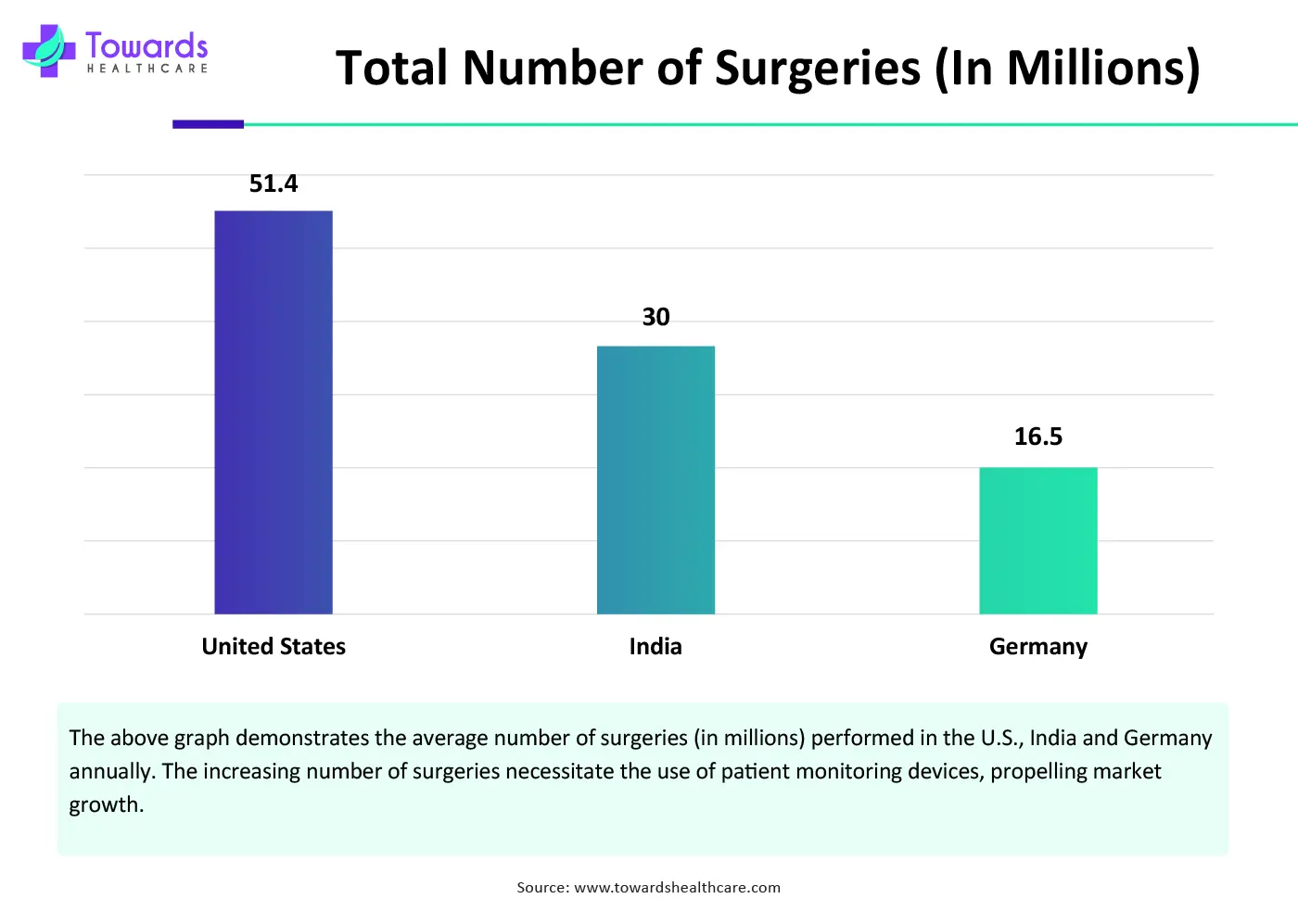
The major growth factor of the patient monitoring devices market is the increasing number of surgeries. The rising incidences and prevalence of chronic disorders lead to an increase in surgeries. Surgeries are also performed due to severe injuries such as sports injuries or road accidents. These necessitate the use and adoption of patient monitoring devices within a healthcare setting. Surgeons must have constant access to patients' vital signs in the operating room to reduce the risk of adverse events during surgery. Some common patient monitoring devices that are essential in an operating room include a thermometer, pulse oximeter, capnography machine, and sphygmomanometer. These devices not only assist surgeons during surgery but also help ensure a successful post-surgery recovery. Hence, the demand for these devices increases with the rise in the number of surgeries globally.
Restraint
High Cost
The major challenge of the market is the high cost of patient monitoring devices. The average annual cost of patient monitoring devices is estimated to be between $300 to $8,000. This leads to limited affordability among people from low- and middle-income groups, restricting market growth.
Opportunity
Wearable Devices
The future of the patient monitoring devices market is promising, driven by the advent of wearable devices. Wearable devices attach to the patient’s body to collect health and fitness data. The advent of wearable devices has expanded the scope of patient monitoring. Technological advancements enhance the overall efficiency and performance of wearable devices. They can continuously monitor a patient’s vital signs, enabling healthcare professionals to get real-time data and make effective clinical decisions. These devices are particularly beneficial for managing chronic diseases. Wearable devices help healthcare devices to focus on patient-centric solutions. Novel devices are being developed to be more user-friendly and less invasive, enhancing patient experience and quality of care. According to a recent survey by the National Heart, Lung, and Blood Institute, nearly one in three Americans use a wearable device.
| Metric | Details |
| Market Size in 2025 | USD 63.94 Billion |
| Projected Market Size in 2035 | USD 134.63 Billion |
| CAGR (2026 - 2035) | 7.73% |
| Leading Region | North America by 40% |
| Historical Data | 2020 - 2023 |
| Base Year | 2025 |
| Forecast Period | 2026 - 2035 |
| Measurable Values | USD Millions/Units/Volume |
| Market Segmentation | By Product, By End Use and By Region |
| Top Key Players | Abbott Laboratories, Accuhealth, BioIntelliSense, Cadence, Dexcom, Inc., GE Healthcare, Hicuity Health, Medical Guardian, Nihon Kohden Corporation, Omron Corporation, Prevounce Health, Royal Philips, Smart Meter, Vesta Healthcare. |
| Segments | Shares % |
| Multi-parameter Monitoring Devices | 22% |
| Cardiac Monitoring Devices | 16% |
| Blood Glucose Monitoring Systems | 14% |
| Respiratory Monitoring Devices | 10% |
| Temperature Monitoring Devices | 8% |
| Hemodynamic/Pressure Monitoring Devices | 8% |
| Fetal & Neonatal Monitoring Devices | 7% |
| Neuromonitoring Devices | 6% |
| Weight Monitoring Devices | 5% |
| Others | 4% |
Multi-parameter Monitoring Devices Segment Dominated
By product, the multi-parameter monitoring devices segment held a dominant patient monitoring devices market share of 22% in 2025. Multi-parameter monitoring devices can simultaneously monitor multiple vital signs on a single display to provide a comprehensive understanding of the patient's condition. The different parameters that can be observed through this device include heart rate, central venous pressure, non-invasive blood pressure, ECG, SpO2, PaCO2, and invasive blood pressure and temperature. They are typically used in ICUs and operation theatres to monitor a patient continuously. The increasing number of hospitalizations and technological advancements boost the segment’s growth.
Cardiac Monitoring Devices Segment: Significantly Growing
By product, the cardiac monitoring devices segment is predicted to witness significant growth in the patient monitoring devices market over the forecast period. The rising prevalence of cardiovascular disorders increases the demand for cardiac monitoring devices. It is estimated that more than 620 million people globally are affected by cardiovascular disorders. These devices can be used in healthcare settings and at home. They help monitor the electrical activity of a patient’s heart and assess their condition before and after a heart attack. These devices can also predict the chances of developing a cardiovascular disorder in the near future. Several government organizations have implemented policies to promote early diagnosis of heart diseases.
| Segments | Shares % |
| Hospitals | 52% |
| Home Care Settings | 28% |
| Ambulatory Surgery Centers | 12% |
| Others | 8% |
Hospital Segment Led in 2025
By end-use, the hospital segment led the global patient monitoring devices market by 52% in 2025. All hospitals utilize some type of patient monitoring device to provide prompt care and address patient issues, thereby saving lives and enhancing patient outcomes. The segmental growth is attributed to suitable capital investment and favorable infrastructure. Hospitals follow stringent regulatory policies, necessitating their adoption of advanced patient monitoring devices. The increasing number of hospitals also contributes to the segment’s growth. There were approximately 7,335 active hospitals in the U.S. as of January 2023.
Home Care Settings Segment: Fastest-Growing
By end-use, the home care settings segment is expected to grow at the fastest rate in the patient monitoring devices market during the forecast period. Patient monitoring devices used in home care settings are referred to as remote patient monitoring. The rising geriatric population and increasing demand for home healthcare are driving the segment’s growth. There were approximately more than 1.1 billion people aged 60 years and above in 2023. Home care eliminates the need for patients to visit any hospital or clinic physically. The advent of wearable devices and smartphones simplifies the monitoring of patient’s conditions.
North America dominated the global patient monitoring devices market by 40% in 2025. The rising prevalence of chronic disorders and technological advancements drive the market. Another major factor is the advanced healthcare infrastructure, which promotes enhanced patient care through the use of advanced devices. The state-of-the-art research and development facilities potentiate the development of novel and more advanced patient monitoring devices. Favorable government policies and regulatory frameworks support market growth in North America.
U.S. Market Trends
The presence of key players boosts the patient monitoring devices market. Abbott Laboratories, GE Healthcare, and Vesta Healthcare hold the majority of the market share in the U.S. The Food and Drug Administration regulates the approval of patient monitoring devices in the U.S. As of March 2025, a total of 188 companion diagnostic devices have been approved or cleared by the U.S. FDA.
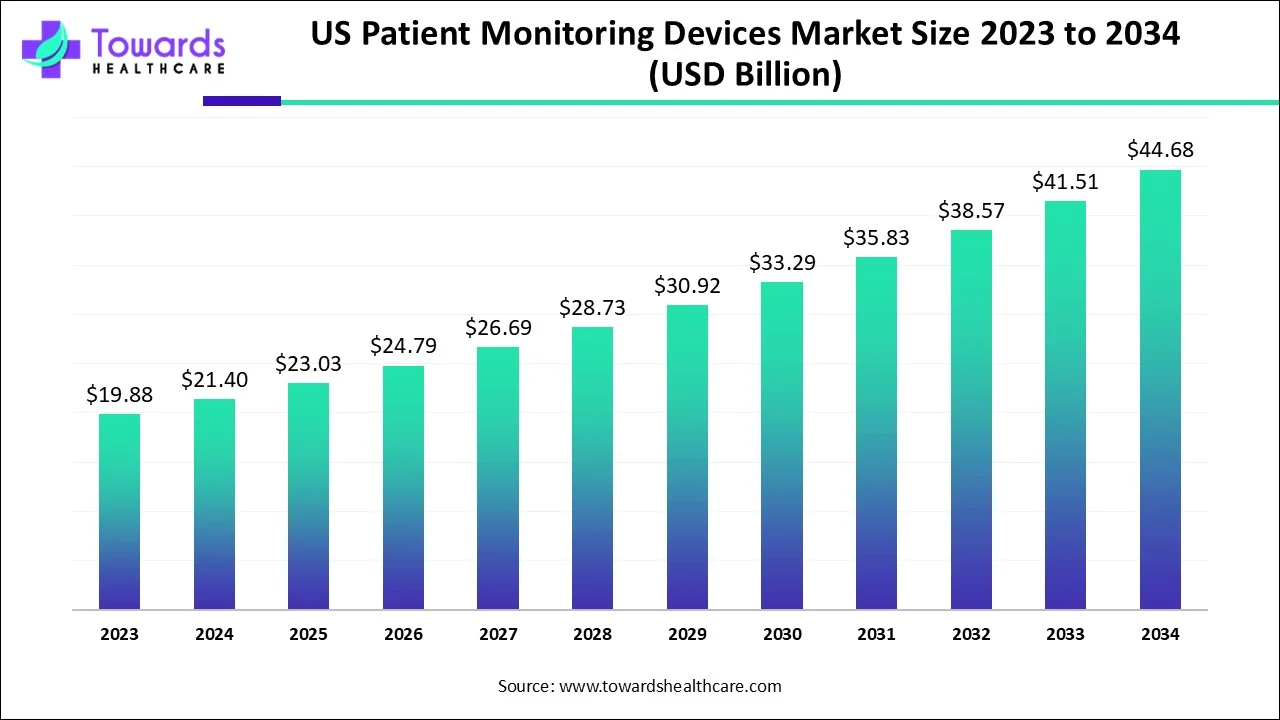
The U.S. patient monitoring devices market is growing steadily. In 2024, it's valued at $21.4 billion and is expected to reach $23.03 billion in 2025. Looking ahead, the market is projected to nearly double, reaching around $44.68 billion by 2034, with an annual growth rate of 7.64% from 2025 to 2034. This growth is largely driven by the increasing number of people with chronic illnesses and continuous advancements in healthcare technology.
Canada Market Trends
The Canadian government also focuses on early disease detection and screening, promoting the use of patient monitoring devices. In March 2025, the government announced an agreement with Quebec, investing over $305 million to support access to new and existing drugs, early diagnosis, and screening for rare diseases, as well as Quebec’s Action Plan on Rare Diseases (2023-2027).
Asia-Pacific is anticipated to grow at the fastest rate in the patient monitoring devices market by 22% share in 2025 during the forecast period. The rising geriatric population and the increasing adoption of advanced technologies augment the market. The increasing investments, collaborations, and mergers & acquisitions potentiate the market. The growing awareness of the importance of regular monitoring of vital signs, particularly in developing countries, is fueling market growth. The rising incidence and prevalence of chronic disorders necessitate the use of patient monitoring devices. Favorable government policies support the indigenous manufacturing of advanced medical devices.
China Market Trends
The Chinese government provides discounted loans and favorable infrastructure construction support to encourage hospitals to upgrade their medical equipment investments. Maximum hospitals and clinics across the U.S. use Chinese-made medical devices due to their low costs. The rising prevalence of cardiovascular disorders is a major concern among the Chinese. It is estimated that around 330 million people in China are affected by cardiovascular disorders.
India Market Trends
The Indian government has recognized the potential of digital health and has introduced several initiatives to promote the adoption of remote patient monitoring. The rising adoption of smart devices and the increasing demand for personalized care are driving market growth. Remote patient monitoring has proved to increase the accessibility of quality healthcare for patients in rural and underserved areas.
Europe is expected to experience considerable growth by 26% share in the patient monitoring devices market over the upcoming period. The presence of key players and favorable government policies propel market growth. Key players, including Nihon Kohden, GE Healthcare, and Medtronic, are among the companies that drive the development of patient monitoring devices in Europe. The European Medicines Agency regulates the approval of patient monitoring devices in Europe. The increasing demand for digital health technologies and early disease diagnosis also contribute to market growth.
Germany Market Trends
The rising healthcare expenditure, growing healthcare awareness, and insurance support potentiate the market. There are more than 1,800 hospitals in Germany, necessitating the installation of patient monitoring devices. Favorable trade policies also foster market growth. In 2023, Germany exported approximately $18.4 billion in medical instruments, making it the second-largest exporter globally.
UK Market Trends
UK's patient monitoring devices market is growing steadily because of increasing chronic disease cases, an aging population, and strong healthcare infrastructure. Hospitals and community healthcare providers are expanding the use of remote patient monitoring technologies. Government support for digital healthcare encourages wider adoption of connected medical devices. Demand for home-based monitoring continues increasing among patients and caregivers. Research institutions and technology companies actively develop innovative monitoring solutions. Future growth will be supported by artificial intelligence, wearable technologies, telehealth expansion, improved data integration, preventive healthcare programs, and continuous medical innovation nationwide.
Léon Kempeneers, Managing Director of Philips Benelux, commented that patient monitoring is a key innovation focus for Philips, and the company utilizes this technology to support healthcare providers in delivering better care to their patients. Systems and software can help caregivers take better care of patients and intervene more quickly. He aims to see many developments in this area with the introduction of artificial intelligence.
By Product
By End-Use
By Region
Speak with a healthcare analyst about your research, consulting, or platform needs.




 sales@towardshealthcare.com