
Find the Right Market Report
Search thousands of industry reports, market insights, and research studies in one place.
Search thousands of industry reports, market insights, and research studies in one place.
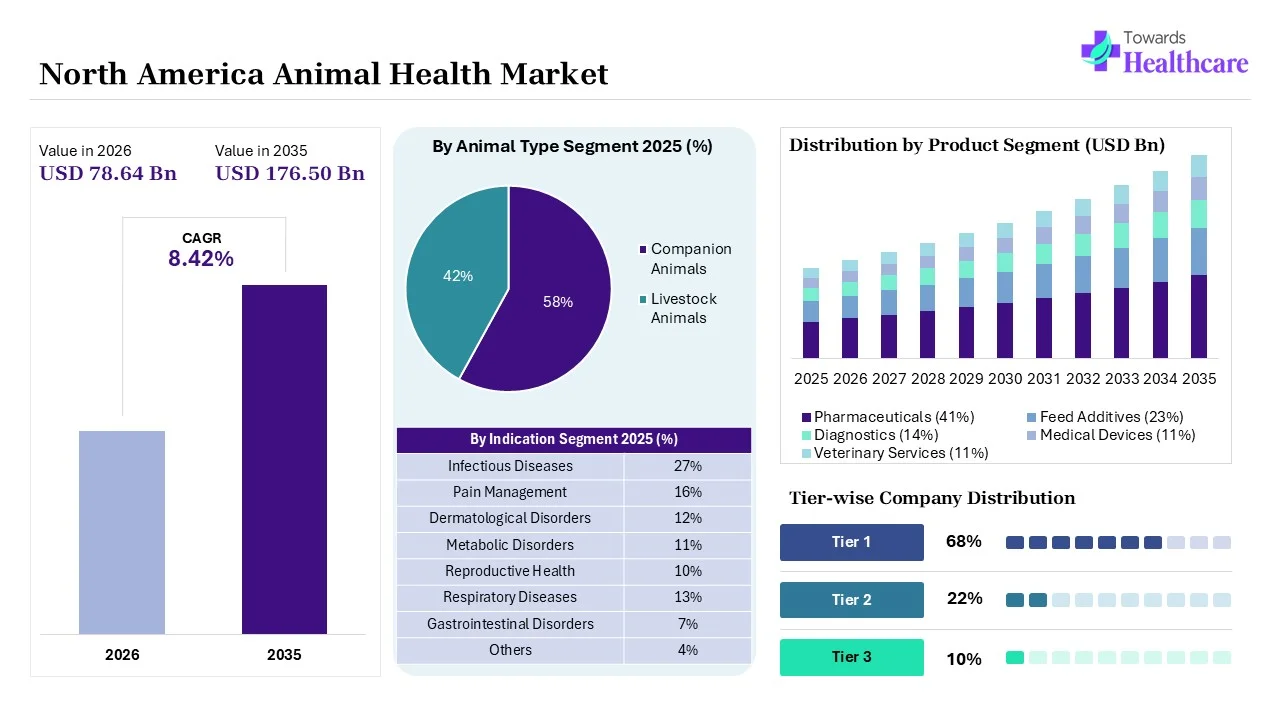
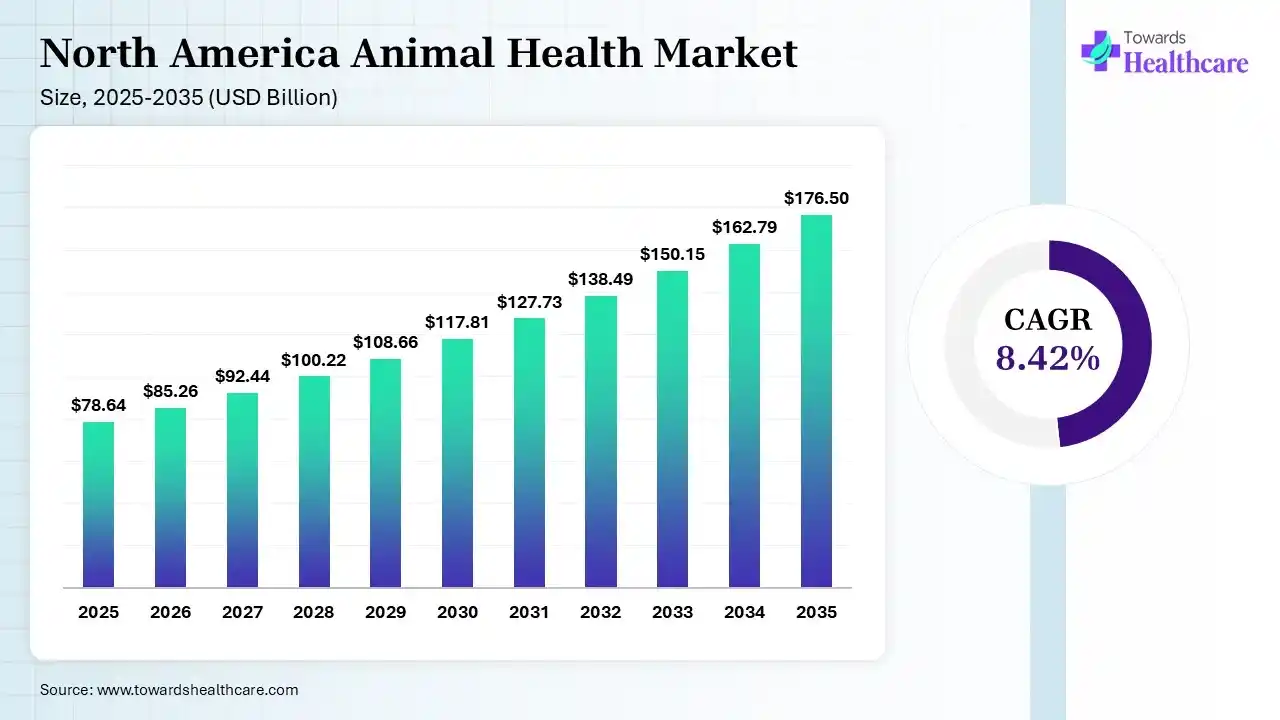
The North America animal health market size was estimated at USD 78.64 billion in 2025 and is predicted to increase from USD 85.26 billion in 2026 to approximately USD 176.5 billion by 2035, expanding at a CAGR of 8.42% from 2026 to 2035. The North America animal health market is increasing because healthy animals are more productive and tend to incur less expense to maintain on land and farms.
Animal health is crucial for preventing and controlling diseases, which helps grow economies, strengthen local communities, and enhance the well-being of vulnerable groups, especially the young and elderly. Investing in animal health boosts productivity, efficiency, and disease prevention, positively impacting financial outcomes. It also plays a vital role in agriculture. As animal welfare becomes a priority, it fosters healthy competition within communities to improve the health and robustness of their animals. Healthier animals are more productive, leading to increased income for poor livestock keepers. For many people, animals are companions, making their health important both emotionally and practically. Additionally, animal health is key for research; many medical breakthroughs have been achieved through studying sick animals.
AI-driven technology has shown promise in shortening challenging tasks, involving the identification of health problems, the forecast of animal productivity, and the monitoring of behaviour, and could potentially offer services to address the continuing challenges. AI-driven technology is broadly used in different sectors, which are significant to increase productivity, enhance animal welfare, and encourage sustainability. A noteworthy application of AI-driven technology is seen in the sectors of animal breeding and genetics, where ML algorithms support predicting traits, assessing genetic diversity, and enhancing breeding approaches by interpreting data. This technology holds important promise for enhancing diagnostics, treatment, animal welfare, and management practices in both veterinary and agricultural sectors.
| Table | Scope |
| Market Size in 2026 | USD 85.26 Billion |
| Projected Market Size in 2035 | USD 176.5 Billion |
| CAGR (2026 - 2035) | 8.42% |
| Historical Data | 2020 - 2023 |
| Base Year | 2025 |
| Forecast Period | 2026 - 2035 |
| Measurable Values | USD Millions/Units/Volume |
| Market Segmentation | By Component, By Animal Type, By Indication, By Route of Administration, By Distribution Channel, By Delivery Mode, By Region |
| Top Key Players | Mars Veterinary Health, IDEXX Laboratories, Merck Animal Health, Elanco Animal Health |
| Segment | Share 2025 (%) |
| Pharmaceuticals | 41% |
| Feed Additives | 23% |
| Diagnostics | 14% |
| Medical Devices | 11% |
| Veterinary Services | 11% |
The Pharmaceuticals Segment Led the North America Animal Health Market in 2025
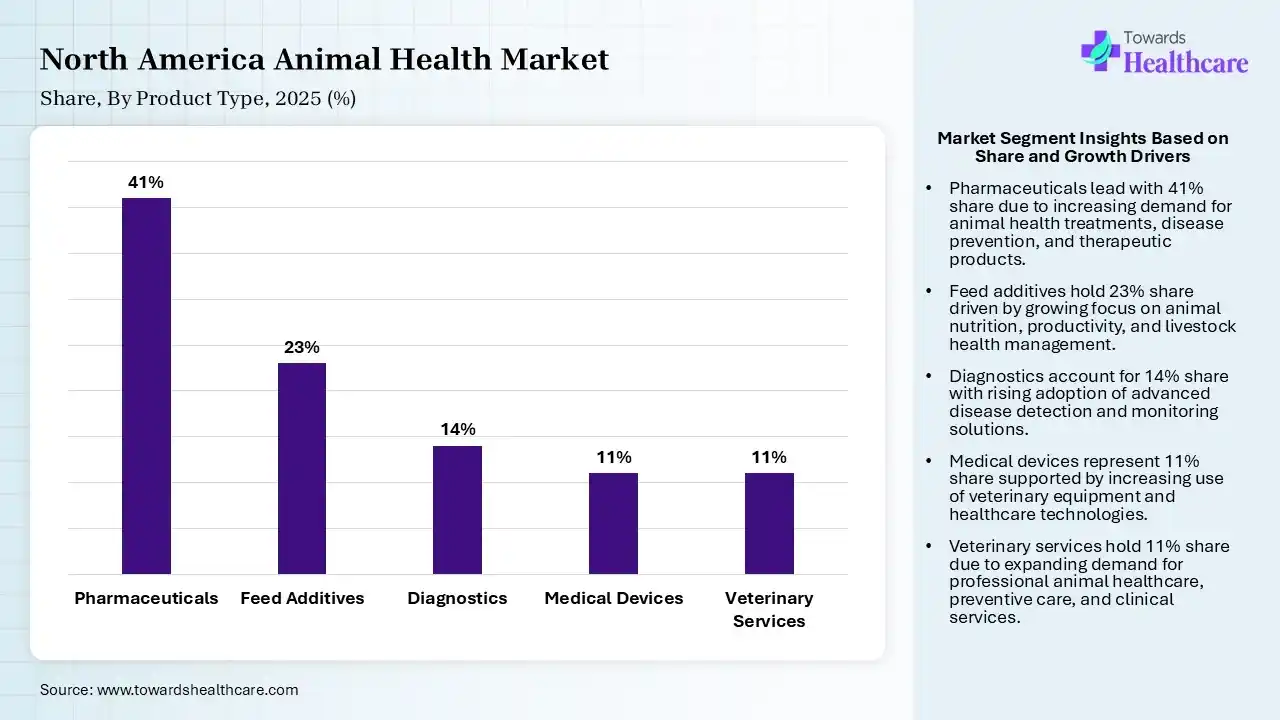
The pharmaceuticals segment contributed the largest market share of 41% in 2025, as pharmaceuticals for veterinary medication aid in the protection of animal welfare, food safety, and public health. Veterinary healthcare products perform significant tasks, from preventing illnesses to managing chronic conditions, which is advantageous for both animals and humans.
The feed additives segment held a significant share of 23% and is expected to grow at the fastest CAGR of 9.4% during the forecast period, in the market, as feed additives play a significant role in advanced animal nutrition to optimise growth, improve feed efficiency, and enhance overall health in livestock. These components are noteworthy in achieving sustainable and efficient animal production.
The diagnostics segment held a significant share of 14% in the North America Animal health market, as diagnostic care is a significant part of possession pet healthy and thriving. It enables veterinarians to detect hidden health challenges, confirm precise diagnoses, and begin appropriate treatment. Diagnostic care includes healthcare tests and technologies that support veterinarians in detecting health challenges.
The medical devices segment held a significant share of 11% in the market, as advanced medical care using portable devices is lowering the stress of animals and offering more precise data. Novel healthcare tools that directly benefit animals are point-of-care healthcare.
| Segment | Share 2025 (%) |
| Companion Animals | 58% |
| Livestock Animals | 42% |
Companion Animals Segment Led the North America Animal Health Market in 2025
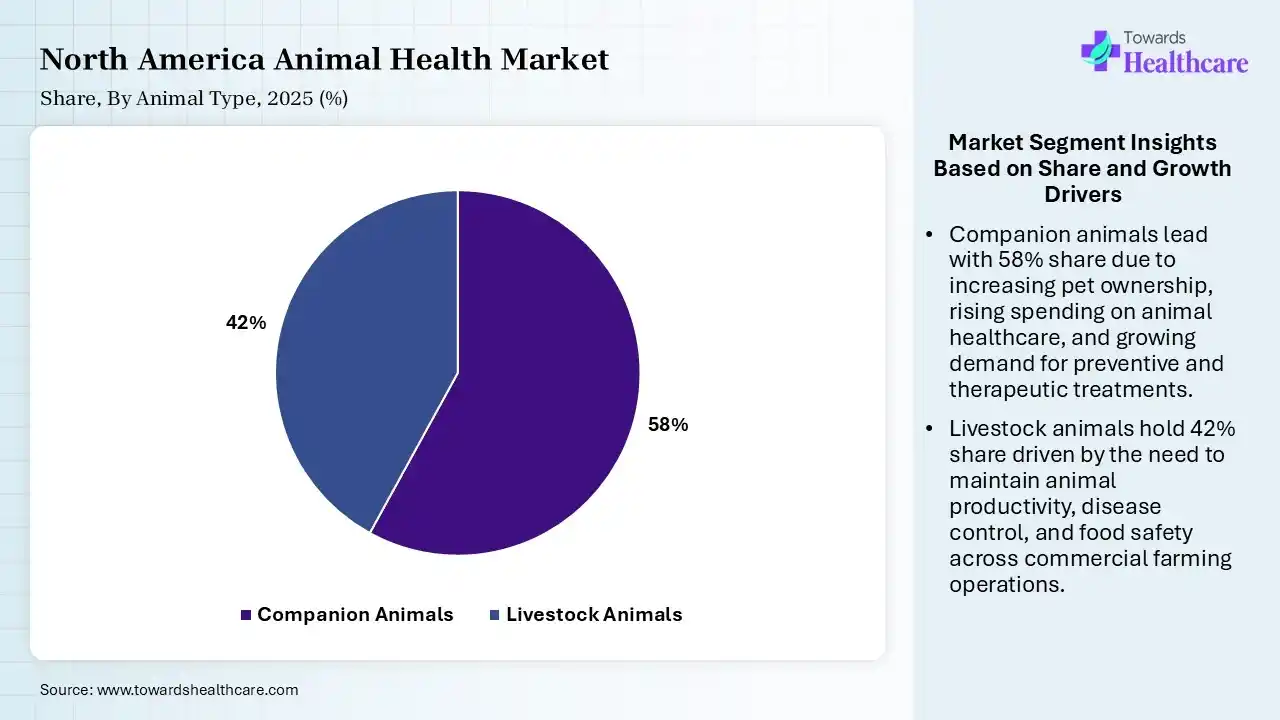
The companion animals segment contributed the largest market share of 58%, and is expected to grow at the fastest CAGR of 9.1% during the forecast period. Companion animals are advantageous for patients' mental health by offering motivation, companionship, stress relief, and comfort, and supporting the maintenance of healthy routines. Companion animals are advantageous to the cognitive, emotional, behavioural, educational, and social advancement of youth and children.
The livestock animals segment held a significant share of 42% of the market. Livestock farming helps the livelihoods and offers food security. Livestock contribute to the global supply of protein and energy and produces nutrient-rich food harvests. Livestock play significant roles in farming systems in emerging countries, helping to provide food and income.
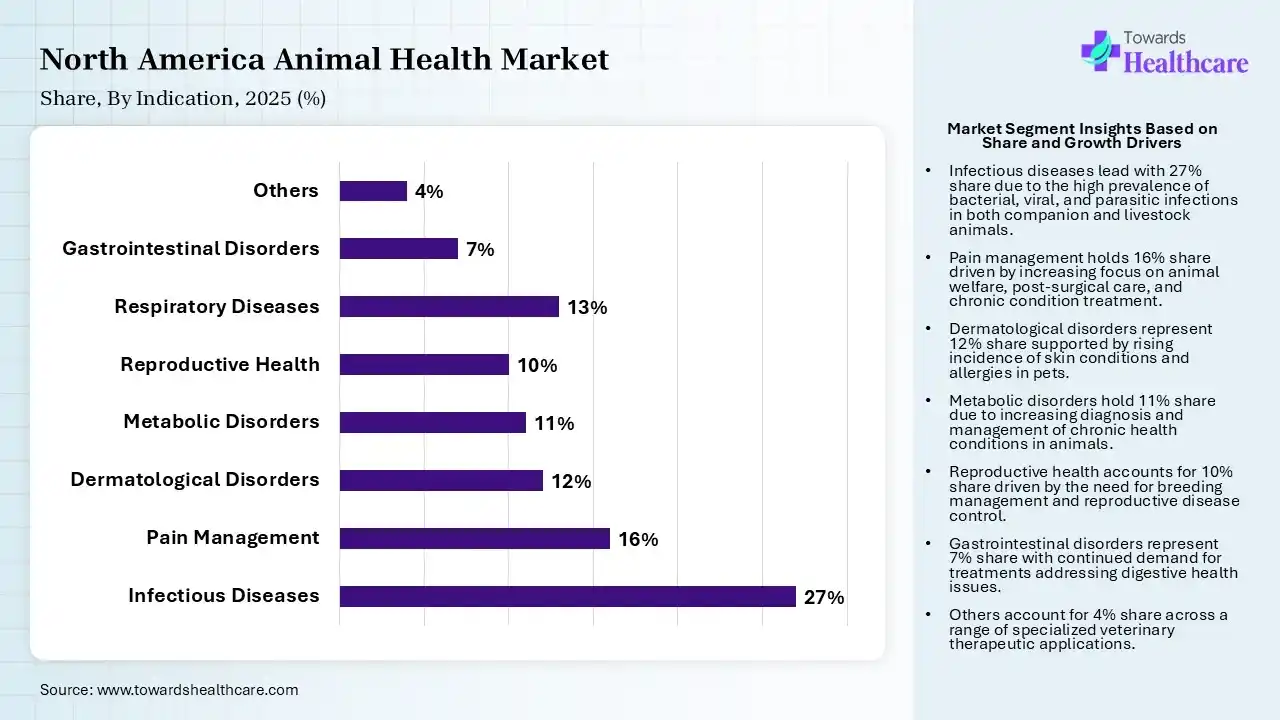
| Segment / Sub-segment Name | Share 2025 (%) |
| Infectious Diseases | 27% |
| Pain Management | 16% |
| Dermatological Disorders | 12% |
| Metabolic Disorders | 11% |
| Reproductive Health | 10% |
| Respiratory Diseases | 13% |
| Gastrointestinal Disorders | 7% |
| Others | 4% |
The Infectious Diseases Segment led the North America Animal Health Market in 2025
The infectious diseases segment held the major share of 27% in the market. Evolving and re-emerging infectious disease outbursts have risen potentially over the past century, massively due to human actions, leading to distress, death, and severe socio-economic consequences. The fast, international transport of animals and animal products enables diseases to traverse areas.
The pain management segment held a significant 16% share of the market, as animal pain management is a vital feature in veterinary medicine. Illness, trauma, and surgery result in acute pain, and advanced management of pain is required for animal welfare. Pain management includes approaches aimed at recognizing, enhancing, and preventing physical suffering in animals, improving their well-being.
The dermatological disorders segment held a significant share of 12% in the North America Animal health market, as infectious skin conditions in animals impact human health, growing urgency for early diagnostics and treatments. Skin disorders show a recurrent occupational challenge for major health professionals, involving veterinarians, and there is a serious impact of skin diseases on their careers and lives.
The gastrointestinal disorders segment captured the market share of 7%, and is expected to grow at the fastest CAGR of 8.9 % during the forecast period, as major animals with a healthy gut are usually more comfortable and less stressed. Digestive distress or diseases lead to behavioural changes like lower feed intake, lethargy, and improved aggression.
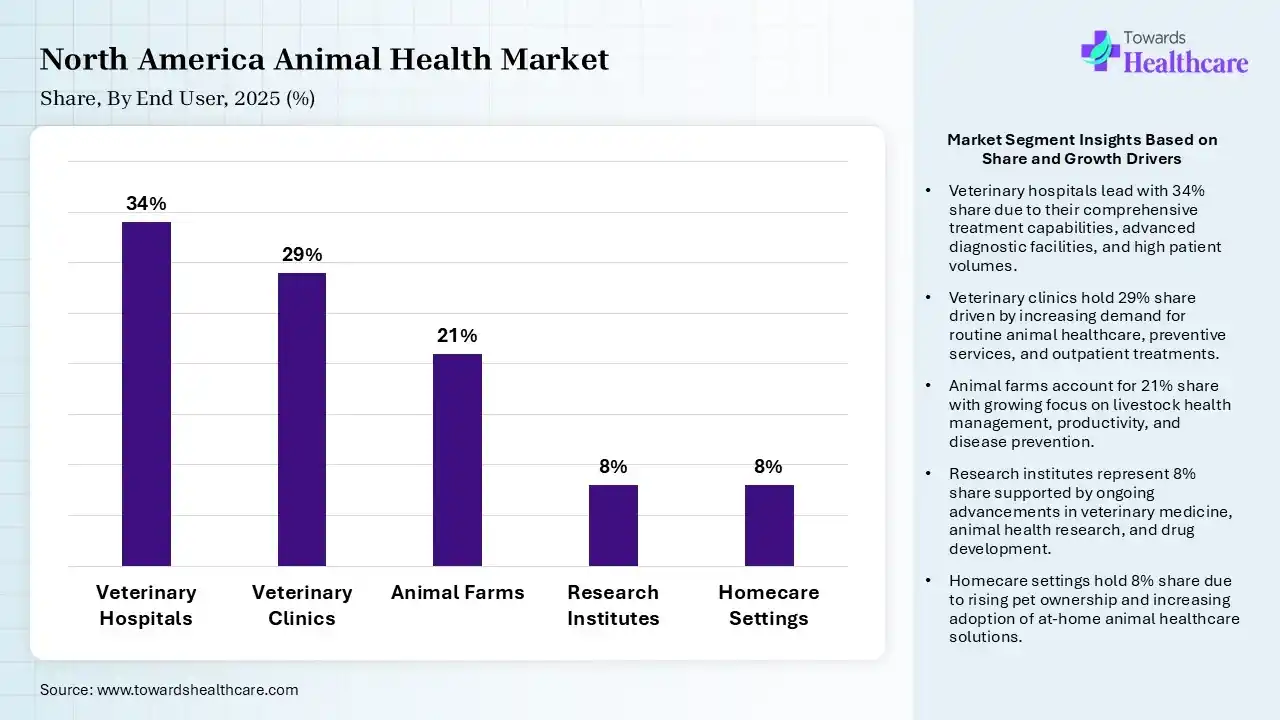
| Segment | Share 2025 (%) |
| Veterinary Hospitals | 34% |
| Veterinary Clinics | 29% |
| Animal Farms | 21% |
| Research Institutes | 8% |
| Homecare Settings | 8% |
The Veterinary Hospitals Segment led the North America Animal Health Market in 2025
The veterinary hospitals segment contributed the largest market share of 34%, as veterinary clinics grow by growing preventive care programs, strengthening client communiqué, rising service convenience, using diagnostics effectively, and maintaining reliable care quality. These services deliver preventive care, allow early disease identification, and offer advanced treatments.
The veterinary clinics segment held a significant share of 29% in the market, as veterinary clinics provide specialised care, involving surgery, treatment, and nursing to address most health challenges. Veterinary solutions are free and focused on pets. Clinics are equipped with well-developed diagnostic solutions that support the early identification and treatment of health challenges.
The animal farms segment held a significant share of 21% in the North America Animal health market, as farm animals contribute not only a source of advanced-quality food that improves nutritional status but also additional resources like manure for fertilizer, on-farm power, and other by-products.
The research institutes segment held a significant share of 8% in the market and is expected to grow at the fastest CAGR of 9.00% during the forecast period. Research in animal models has made it possible to treat major diseases and even eradicate some, like smallpox and polio. Researchers have made important human and animal life-saving discoveries via their work.
North America remains a major animal health market because of advanced veterinary infrastructure, strong livestock production, and rising pet ownership. The United States has over 190 million cattle, pigs, and sheep, creating consistent demand for vaccines, diagnostics, and feed additives. Canada strengthens the market through dairy, poultry, and aquaculture investments. Companion animal care continues expanding as households spend more on preventive treatments and wellness services. Leading pharmaceutical companies invest in biologics, digital monitoring tools, and precision livestock technologies. Collaboration between veterinary hospitals, research institutes, and biotechnology firms accelerates innovation. Strong regulatory standards, increasing zoonotic disease awareness, and continuous research funding support long-term market development across the region.
US Market Trends
The U.S. has a massive-scale agriculture, dairy sectors includes the farms, cooperatives, and organizations that produce milk, cheese, and related products like milking machines, and distribute them to the producers. 66% of U.S. households own animals, which accounts for 86.9 million households, which drives the demand for animal healthcare solutions.
Canada Market Trends
The Canadian livestock technology is extremely dependent on constant access to the international sector for products. Canada has recognized a set of urgencies for research and development of novel and enhanced human and animal vaccines. The veterinary and healthcare supply chain in Canada has experienced significant consolidation.
Mexico Market Trends
Mexico's animal health market is expanding because of its strong livestock industry and growing companion animal population. The country has more than 36 million cattle and remains one of the world's leading beef producers, supporting demand for vaccines, feed additives, and veterinary medicines. Poultry and swine farming also encourage wider adoption of disease prevention products. Pet ownership continues increasing in urban areas, boosting spending on diagnostics and preventive care. Government animal disease control programs, improving veterinary infrastructure, and investments from international animal health companies support steady market development across Mexico.
R&D:
Manufacturing Processes:
Animal Support Services:
| Company | Headquarters | Latest Update |
| Mars Veterinary Health | United States | Mars Impact Fund grants $726000 to expand veterinary care, pet welfare & rabies vaccination programs across Uttar Pradesh. |
| IDEXX Laboratories | United States | IDEXX Laboratories is driving growth in the animal health sector with advanced AI-driven diagnostics and expanded parasite screening. |
| Merck Animal Health | United States | In February 2026, Merck Animal Health and the U.S. Food and Drug Administration (FDA) received approval of NUMELVI, the first and only second-generation Janus kinase inhibitor indicated for the control of pruritus associated with allergic dermatitis in dogs six months of age and older. |
| Elanco Animal Health | United States | In May 2026, Elanco Animal Health Incorporated announced the phased launch of Befrena, a novel anti-IL-31 monoclonal antibody (mAb) injection for the treatment of canine sensitive and atopic dermatitis. |
In June 2026, "New World screwworm could have a devastating impact on animal health, welfare, and producer livelihoods," said Jeff Simmons, President and CEO, Elanco Animal Health. "We want to thank the FDA, EPA, and USDA for all their work to prepare for this threat. We're committed to supporting our customers during this challenging time by delivering innovation, scientific expertise, and available resources to help treat New World screwworm and support the health and well-being of animals."
Strengths
Weakness
Opportunities
Threat
By Component
By Animal Type
By Indication
By Route of Administration
By Distribution Channel
By Delivery Mode
By Region
Speak with a healthcare analyst about your research, consulting, or platform needs.




 sales@towardshealthcare.com