
Find the Right Market Report
Search thousands of industry reports, market insights, and research studies in one place.
Search thousands of industry reports, market insights, and research studies in one place.

Pipeline Programs

CGT Companies Tracked

Manufacturing Facilities
The mycobacterium tuberculosis market size stood at USD 820.23 million in 2025, grew to USD 869.44 million in 2026, and is forecast to reach USD 1468.91 billion by 2035, expanding at a CAGR of 6% from 2026 to 2035.
Mycobacterium tuberculosis is a bacteria that causes tuberculosis (TB) in humans. TB is an infectious disease that infects the lungs or other tissues. Symptoms of TB include a long-lasting cough, pain in the chest, coughing up blood or sputum, fatigue or weakness, loss of appetite, and weight loss. TB is diagnosed using tuberculin skin tests, blood tests, sputum tests, X-rays, or CT scans. The common treatment drugs for TB include isoniazid, rifampin, ethambutol, pyrazinamide, and rifapentine.
The increasing incidences of TB disease drive the market. TB is the second-leading infectious killer disease after COVID-19 globally. According to the WHO, approximately 10.6 million people globally were reported with TB in 2022, out of which 5.8 million were men, 3.5 million were women, and 1.3 million were children. Additionally, the advent of advanced detection techniques for TB and growing research and development augment the market growth. The rise in multi-drug resistant TB (MDR TB) increases the demand for novel drug discovery, potentiating the market.
The latest technological advancements such as artificial intelligence (AI) and machine learning (ML) algorithms revolutionize the diagnosis and treatment of mycobacterium tuberculosis. AI can automatically detect the bacilli responsible for causing TB, thereby reducing the workload on pathologists and minimizing manual errors. AI models can also aid in analyzing imaging data obtained for pulmonary tuberculosis. Additionally, AI plays a significant role in discovering novel drugs and drug delivery systems for the treatment of TB. AI can predict the potential adverse effects and efficacy profile of the developed drugs. Furthermore, AI has potential applications in personalized therapy by suggesting appropriate drug candidates based on the person's genetic profiling.
The increasing incidences of tuberculosis and deaths have led to the development of early detection and efficient treatment regimens. Several government bodies and private organizations are investing in supporting TB research. The advancements in technology and biotechnology research demonstrate innovations in TB diagnosis. The demand for rapid and accurate detection promotes innovations in diagnostic testing. Novel testing methods such as nucleic acid amplification tests (NAAT) and line probe assays (LPA) are based on PCR techniques. Researchers have also developed novel methods based on gene editing techniques like CRISPR-Cas9 to identify the genes of mycobacterium tuberculosis bacteria. Additionally, advanced technologies like artificial intelligence drive automation in the detection. Computer-aided detection for chest radiographs uses AI to improve sensitivity and specificity.
Patients in rural areas of many countries, especially in lower- and middle-income countries, find it difficult to access high-quality healthcare services. This limits the early detection of TB, thereby hampering efficient treatment of the patients, resulting in slow and insufficient case detection and low cure rates. Additionally, the huge treatment costs limit the affordability of poor people. The treatment cost depends on the severity of the disease, and it ranges from $20,000 to $200,000 annually in the U.S.
| Table | Scope |
| Market Size in 2026 | USD 869.44 Million |
| Projected Market Size in 2035 | USD 1468.91 Million |
| CAGR (2026 - 2035) | 6% |
| Leading Region | North America |
| Historical Data | 2020 - 2023 |
| Base Year | 2025 |
| Forecast Period | 2026 - 2035 |
| Measurable Values | USD Millions/Units/Volume |
| Market Segmentation | By Type, By Application, By Region |
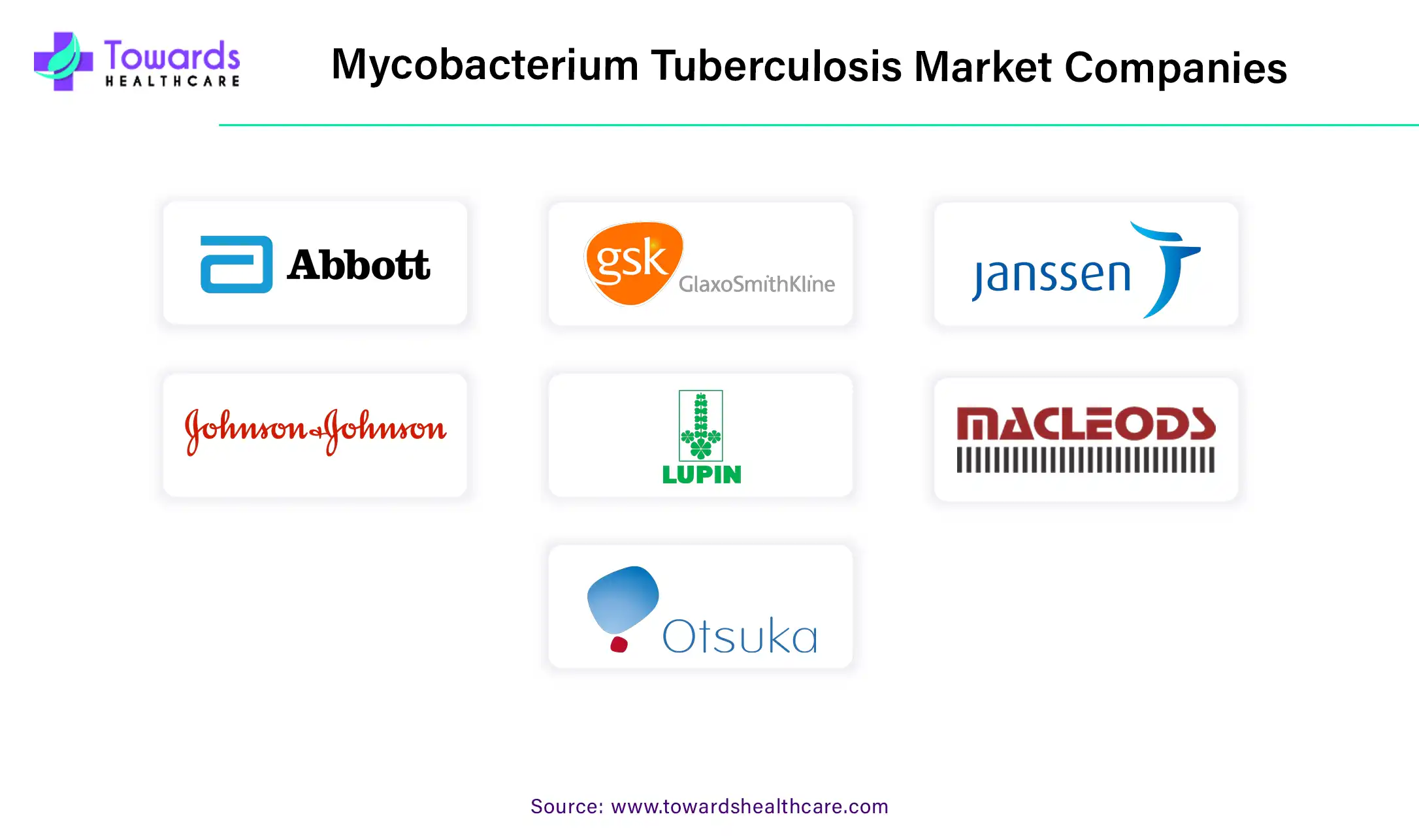
| Top Key Players | Abbott Laboratories, GlaxoSmithKline, Janssen Pharmaceuticals, Johnson & Johnson, Lupin, Macleods Pharmaceuticals Ltd., McNeil & Argus Pharmaceuticals Ltd., Otsuka Pharmaceutical, Roche Diagnostics, Sequella, Inc., Thermo Fisher Scientific, Inc. |
The Molecular Rapid Diagnosis Segment Led the Market in 2025
The molecular rapid diagnosis segment held the largest share of the mycobacterium tuberculosis market in 2025. The demand for point-of-care diagnostics boosts the segment growth. Molecular rapid diagnosis has high diagnostic accuracy for detecting TB and MDR TB. The segment is also attributed to the recommendation by the WHO.
The culture method is projected to grow significantly in the market over the coming years. The culture method is widely used during treatment monitoring and is the most sensitive and specific phenotypic method for detecting mycobacterium tuberculosis.
The Hospital Segment Led the Mycobacterium Tuberculosis Market in 2025
The hospital segment held the largest market share in 2025. Hospitals are highly preferred as they possess specialized equipment for diagnosis and necessary treatment regimens depending on the patient’s condition. Hospitals have favorable infrastructure and trained professionals to treat the patients. Additionally, favorable reimbursement policies promote segment growth.
The clinics segment is expected to grow rapidly in the market during the forecast period. Clinics are preferred for the diagnosis and treatment of the initial stages of TB. Easy access and less expensive facilities make it a suitable choice.
Thierry Bernard, CEO and MD of Qiagen commented that there is an urgent need for global coordination and investment in TB control measures. He added that there is a need to address misconceptions, increase funding, and implement effective strategies to eradicate TB and prevent future outbreaks.
North America dominated the mycobacterium tuberculosis market in 2025. The state-of-the-art research and development facilities, increasing incidences of TB, and increasing investments drive the market. There were around 8,331 TB cases in the US and 1,971 TB cases in Canada in 2022. The U.S. reported a 5.9% increase in cases from 2021. The US and the Canadian governments regularly release guidelines on eradicating TB in the region. Each US state has its own TB program. The Division of Tuberculosis Elimination by the CDC funds four Tuberculosis Centers of Excellence for Training, Education, and Medical Consultation for the project period of 2023-2027. The market is also driven by technological advancements and the increasing number of clinical trials. The US is the largest donor to the Global Fund to Fight AIDS, TB, and Malaria. The US funding for 2023 was around $406 million.
U.S. Market Trends
The U.S. mycobacterium tuberculosis market is growing because of rising screening, advanced diagnostics, and strong public health programs. The country reported about 10,347 tuberculosis cases in 2024, showing continued demand for accurate detection and treatment. Increasing use of molecular testing and research on drug-resistant tuberculosis support market expansion. Government funding, hospital investments, and development of faster diagnostic technologies will strengthen market growth during the coming years.
Canada Market Trends
Canada's mycobacterium tuberculosis market is expanding because of improved surveillance, better laboratory testing, and focused screening among high-risk populations. The country reports approximately 2,000 tuberculosis cases each year, with higher rates in northern and Indigenous communities. Growing adoption of rapid molecular diagnostics, stronger public health initiatives, and investments in tuberculosis prevention and research will support market growth. Better access to early diagnosis and treatment will further improve demand.
Asia-Pacific is anticipated to grow fastest during the forecast period. The rising geriatric population, increasing incidences of TB, and growing research and development activities drive the mycobacterium tuberculosis market. In Japan, around 10,235 cases of TB were reported in 2022. Meanwhile, in South Korea, 20,383 TB cases were reported in 2022. Several government and private programs to eradicate TB also augment the market growth. Programs like the “5-year National TB Control Program” and the “National Tuberculosis Elimination Program” by the China and India Governments promote control and prevention of TB in the nation. Also, the Japan Anti-Tuberculosis Association aims to conduct activities related to the prevention and care of TB and spread awareness regarding the same. In 2022, the Indian Council of Medical Research (ICMR) was the fifth-largest funder of TB research, with an investment of $20 million.
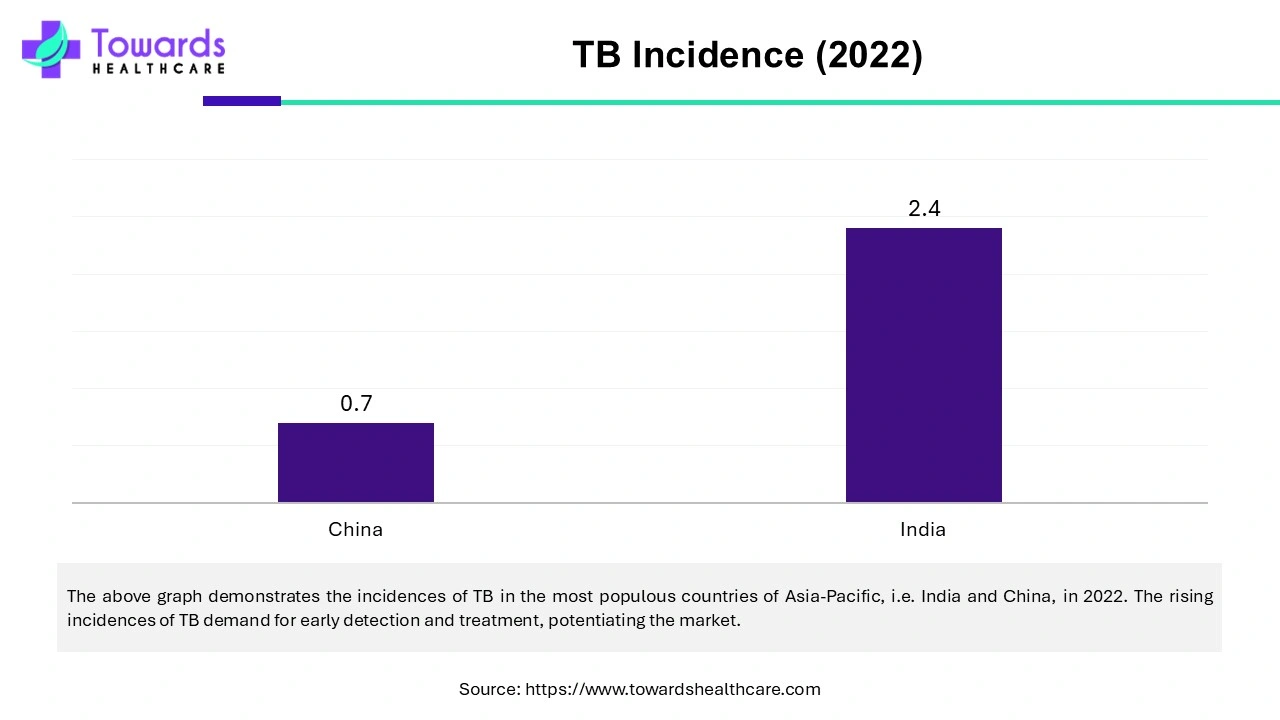
China Market Trends
China's Mycobacterium tuberculosis market is growing due to its high disease burden and ongoing investments in tuberculosis control. The country recorded an estimated approximately 700,000 tuberculosis cases in 2024, making it one of the highest-burden countries globally. Demand for rapid diagnostics, drug-resistance testing, and innovative therapies continues increasing. Government healthcare reforms, expanded screening programs, and stronger research activities will support sustained market growth in the coming years.
India Market Trends
India's Mycobacterium tuberculosis market is expanding because it carries the world's highest tuberculosis burden and continues to strengthen its disease control programs. The country recorded an estimated 2.7 million tuberculosis cases in 2024, representing about one-quarter of global cases. Rising adoption of molecular diagnostics, active case-finding campaigns, and improved treatment access are increasing demand. Government initiatives, healthcare investments, and continued innovation in tuberculosis testing will support future market growth.
By Type
By Application
By Region
Speak with a healthcare analyst about your research, consulting, or platform needs.




 sales@towardshealthcare.com