
Find the Right Market Report
Search thousands of industry reports, market insights, and research studies in one place.
Search thousands of industry reports, market insights, and research studies in one place.

Pipeline Programs

CGT Companies Tracked

Manufacturing Facilities
The global inhalable biologics market size was estimated at USD 4.51 billion in 2025 and is predicted to increase from USD 5.3 billion in 2026 to approximately USD 22.87 billion by 2035, expanding at a CAGR of 17.64% from 2026 to 2035.
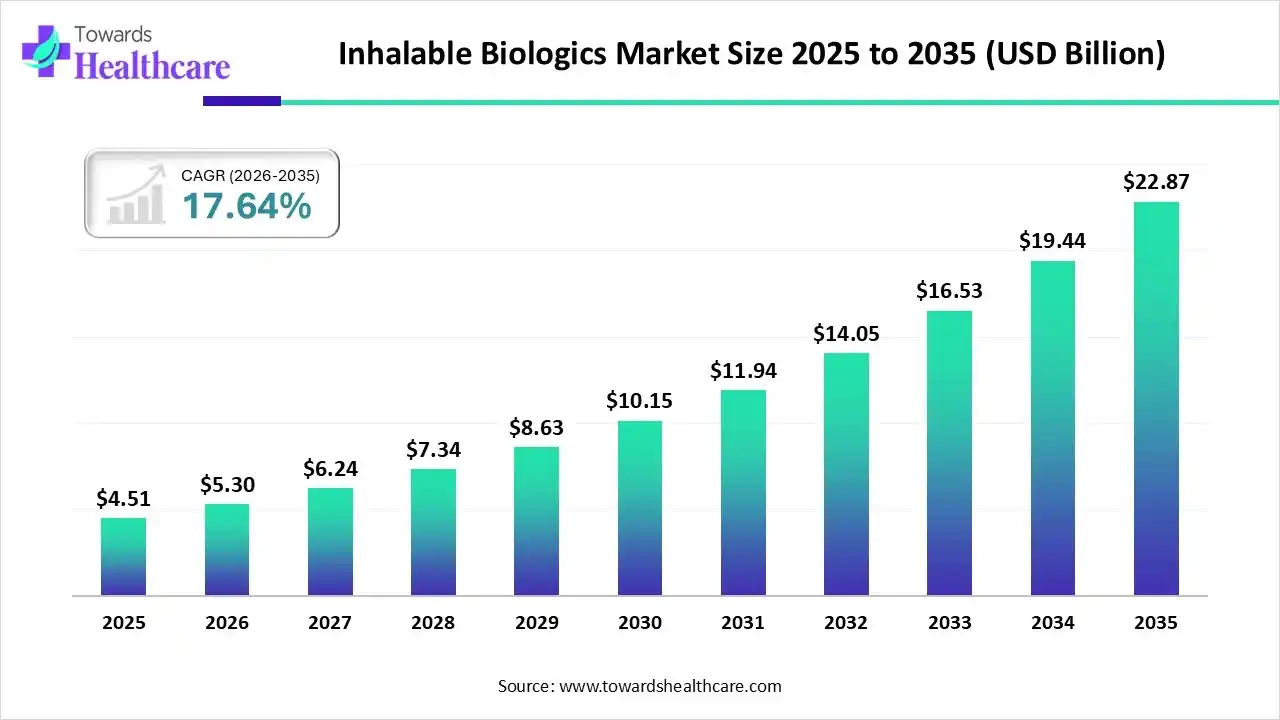
The growing chronic diseases and the demand for target-specific products are increasing the use of inhalable biologics. The growing technological advancements, expanding healthcare, and new launches are also promoting the market growth.
The inhalable biologics market is fueled by the growing respiratory conditions and shift towards patient-centric, non-invasive delivery platforms. The inhalable biologics encompass the biological drugs delivered through the respiratory tract offering local or systemic action. They are being utilized for the treatment of various respiratory diseases, genetic diseases, diabetes, and metabolic disorders.
Inhalable biologics include proteins, peptides, monoclonal antibodies, vaccines, nucleic acids, and other large biological molecules formulated for pulmonary delivery. Advanced technologies such as dry powder inhalers, nebulizers, and metered-dose inhalers improve drug stability and targeted delivery. This approach helps reduce injections, enhances patient comfort, and supports better treatment adherence. Researchers are also developing advanced formulations that improve absorption, extend drug action, and reduce dosing frequency for chronic diseases and long-term therapies.
The market is supported by continuous progress in biotechnology, inhalation devices, and formulation science. Pharmaceutical companies are investing in innovative inhaled biologics for respiratory and systemic diseases. Increasing clinical research and strategic partnerships are accelerating product development. Regulatory support for innovative drug delivery technologies is also encouraging innovation. Growing demand for personalized medicine, home-based treatment, and self-administration is expected to create new opportunities, making inhalable biologics an important area of future pharmaceutical development and healthcare innovation.
In the development of inhalable biologics, AI is being utilized for target identification and product optimization. The particle size, shape, density, pharmacokinetics, and device performance are also optimized using AI, which also predicts the stability and adverse effects of the biologics. Moreover, it is also being used in the development of smart inhalers, tracking usage patterns, lung function, and treatment effectiveness.
Advancements In Biologic Therapies
Due to growing chronic diseases, the demand for their treatment options is increasing, which is driving the development of next-generation inhalable biologics, offering target-specific action for various diseases.
Blooming Delivery Systems
To enhance the delivery, stability, and absorption of the biologics through the nasal route, a wide range of delivery systems, such as solid powders, lipid carriers, and nanoparticle carriers, are being developed.
Shift Towards Home Care
There is a rise in the demand for self-administered inhalable biologics, due to growing home-based care for the long-term management of chronic disease, which is increasing the development of new portable nebulizers and the integration of dosage tracking technologies.
| Table | Scope |
| Market Size in 2026 | USD 5.3 Billion |
| Projected Market Size in 2035 | USD 22.87 Billion |
| CAGR (2026 - 2035) | 17.64% |
| Leading Region | North America by 40% |
| Historical Data | 2020 - 2023 |
| Base Year | 2025 |
| Forecast Period | 2026 - 2035 |
| Measurable Values | USD Millions/Units/Volume |
| Market Segmentation | By Type, By Application, By Dosage Form, By Distribution Channel, By Region |
| Top Key Players | AstraZeneca, GlaxoSmithKline (GSK), MannKind Corporation, Lonza Group, Cipla, Vectura Group, Aradigm Corporation, Teva Pharmaceutical Industries, Inovio Pharmaceuticals, Spero Therapeutics |
Why Did the Peptides and Proteins Segment Dominate in the Inhalable Biologics Market in 2025?
The peptides and proteins segment held the dominating share of the market in 2025, due to their enhanced potency. They also offered low doses and rapid absorption, which increased their use. Moreover, their poor oral availability and non-invasive approaches also increased the use of inhalable solutions.
RNAi-based Therapeutics
The RNAi-based therapeutics segment is expected to show the highest growth during the upcoming years, due to their target-specific action. They also provide long-term effectiveness, reducing the dosing frequencies. The growing advancements in the formulations and delivery systems are also increasing their adoption rates.
How Respiratory Diseases Segment dominate the Inhalable Biologics Market in 2025?
The respiratory diseases segment led the market in 2025, as the inhalable biologics offer direct delivery to the lungs. The faster onset of action and low systemic side effects also encouraged their use. The growth in respiratory diseases also increased their use as a non-invasive approach, which enhanced patient adherence to the treatment.
Diabetes
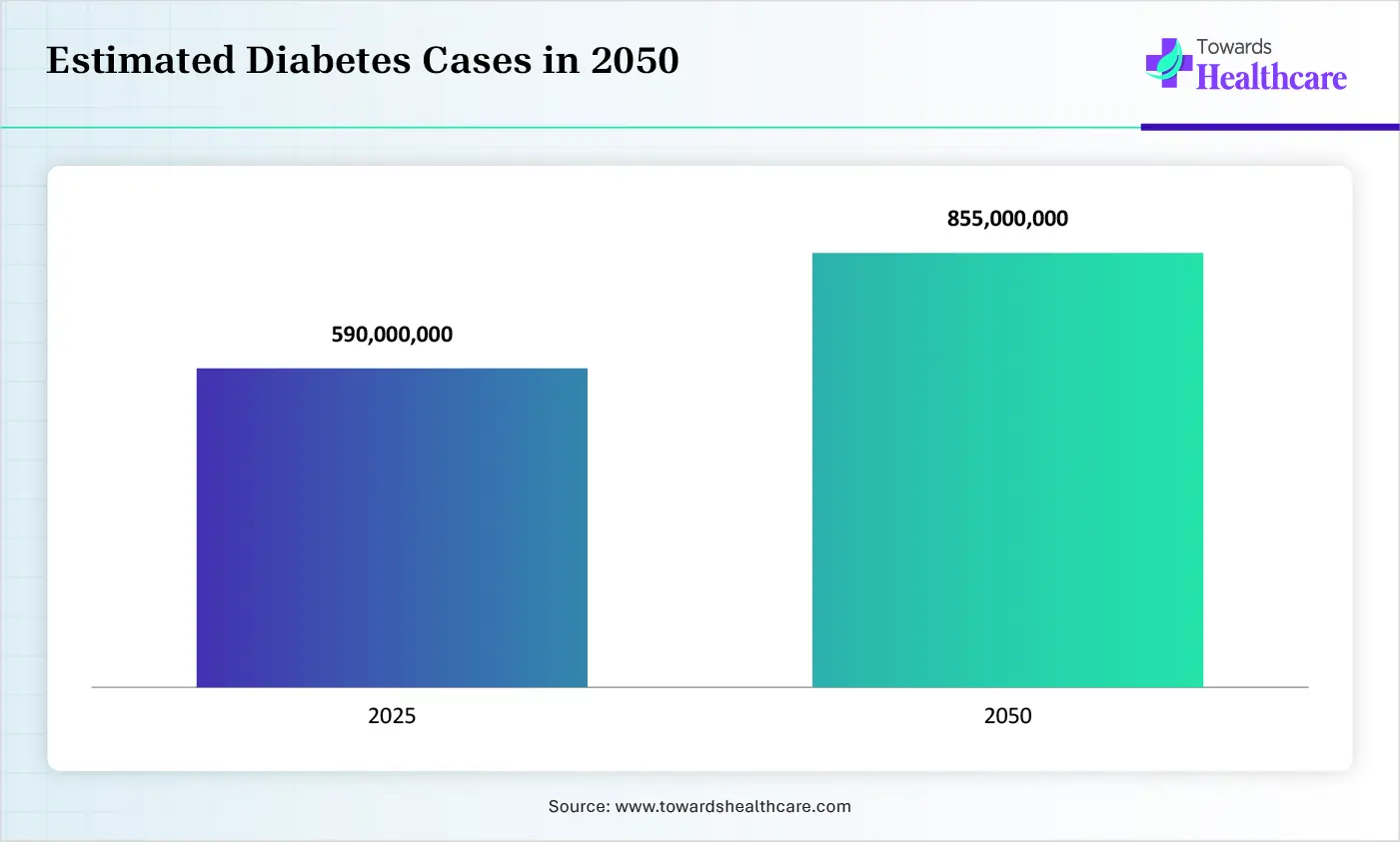
The diabetes segment is expected to show the fastest growth rate during the upcoming years, due to its growing incidence rates. This is increasing the demand for insulin therapies with longer duration of action, promoting the use of their inhalational solutions. Their growing approvals and enhanced patient comfort are also increasing their acceptance rates.
Which Dosage Form Type Segment Held the Dominating Share of the Inhalable Biologics Market in 2025?
The dry powder inhalers segment held the dominating share of the market in 2025, due to their enhanced stability. Their portability, non-propellant, and ease of use increased their acceptance rates for the management of chronic disease conditions. Moreover, their acute dosing and widespread availability also increased their use.
Nebulizers
The nebulizers segment is expected to show the highest growth during the predicted time, due to their ability to deliver high doses of biologics. They are also being used in a wide range of age groups, as they deliver the drug during normal breathing. This is driving the development of new portable nebulizers.
What Made Hospital Pharmacies the Dominant Segment in the Inhalable Biologics Market in 2025?
The hospital pharmacies segment led the market in 2025, as they offered medical supervision. Their effective handling and advanced storage facilities also increased the purchase volume of the inhalable biologics. Moreover, the insurance policies also attracted the patients and increased their use during the severe cases.
Retail Pharmacies
The retail pharmacies segment is expected to show the fastest growth rate during the predicted time, due to their widespread availability and presence of various products. The growing shift towards home care and increasing health awareness are also increasing their use for the long-term management of chronic diseases.
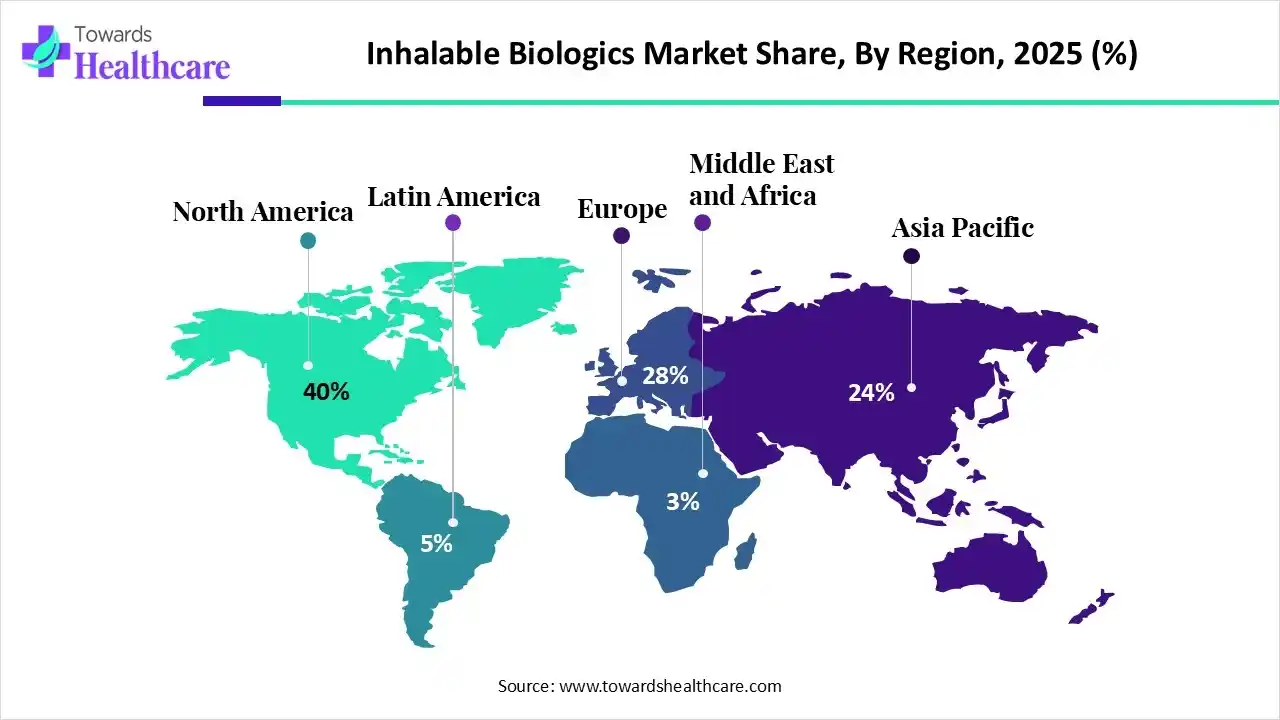
North America dominated the inhalable biologics market by 40% share in 2025, due to the presence of advanced healthcare infrastructure, which increased the adoption rates of the inhalable biologics. The growth in the R&D activities focused on innovative therapies and increased respiratory diseases, also increased their use, where the high healthcare investments also contributed to the market growth.
U.S. Market Trends
The U.S. consists of advanced healthcare and R&D infrastructure, which is increasing the use and innovations of inhalable biologics, where the reimbursement policies are also increasing their use. There is a rise in the innovations of inhalational insulin and monoclonal antibodies, where the growing regulatory approvals are also increasing their advancements.
Canada Market Trends
Canada's inhalable biologics market is growing with increasing cases of respiratory diseases and strong investment in biotechnology research. Academic institutions and pharmaceutical companies are developing advanced inhaled biologic therapies. Government support for healthcare innovation encourages clinical research. Demand for non-invasive drug delivery is rising among patients and healthcare providers. Growing adoption of personalized medicine and home-based treatment will continue creating opportunities for future market expansion.
Asia Pacific is expected to host the fastest-growing inhalable biologics market by 24% share during the forecast period, due to growing respiratory diseases and diabetes cases. The increasing health awareness is also increasing the use of inhalable biologics, where the expanding healthcare is also increasing their innovations, which are backed by investment from various sources, enhancing the market growth.
China Market Trends
The expanding healthcare is increasing the adoption of inhalable biologics in China to tackle the growing chronic respiratory disease and diabetes. The growing health awareness is also increasing their use, where the government support and investments are also increasing their advancements.
India Market Trends
India's inhalable biologics market is expanding because of rising respiratory disease burden, improving healthcare infrastructure, and increasing biotechnology investments. Pharmaceutical companies are focusing on innovative inhaled therapies for chronic diseases. Government initiatives supporting domestic biopharmaceutical manufacturing encourage product development. Growing awareness of non-invasive treatment options is increasing patient acceptance. Continuous clinical research, expanding healthcare access, and affordable drug development will support future market growth across the country.
Europe is expected to grow significantly in the inhalable biologics market by 28% share during the forecast period, due to high adoption of biologics, which increased their innovations, driving the use of inhalable biologics. The presence of advanced healthcare and growth in chronic diseases is also increasing their use, where growth in home-based healthcare is also increasing their acceptance rates, promoting market growth.
UK Market Trends
The presence of advanced healthcare systems is increasing the use of inhalable biologics in the UK. The growing cases of asthma and cystic fibrosis are also increasing their use, where the robust R&D infrastructure is also driving new opportunities in the development of novel biologics and drug delivery devices.
Germany Market Trends
Germany's inhalable biologics market is growing steadily with strong pharmaceutical research, advanced healthcare infrastructure, and increasing demand for innovative respiratory therapies. Biotechnology companies are investing in inhaled biologic formulations and advanced drug delivery technologies. Research collaborations between industry and academic institutions support product innovation. Rising adoption of personalized medicine and non-invasive treatments is driving demand. Continuous investments in clinical research will strengthen future market development.
R&D
Clinical Trials and Regulatory Approvals
Patient Support and Services
| Companies | Headquarters | Inhalable Biologics |
| AstraZeneca | Cambridge, UK | Inhaled monoclonal antibodies and biologics |
| GlaxoSmithKline (GSK) | London, UK | Ellipta dry powder inhaler platform |
| MannKind Corporation | Danbury, U.S. | Offers Afrezza |
| Lonza Group | Basel, Switzerland | Provides inhalable biological proteins |
| Cipla | Mumbai, India | Offer inhaler devices and biosimilars |
| Vectura Group | Chippenham, UK | Inhaled drug delivery for biologics and complex molecules |
| Aradigm Corporation | Hayward, U.S. | Inhaled liposomal formulations for severe lung infections and cystic fibrosis |
| Teva Pharmaceutical Industries | Tel Aviv, Israel | Digihaler smart devices |
| Inovio Pharmaceuticals | Plymouth Meeting, U.S. | DNA-based inhalable vaccines and therapies |
| Spero Therapeutics | Massachusetts, U.S | Inhaled antibiotics and biologics |
In January 2025, “Lonza is a world leader in bioavailability enhancement and renowned for its spray-drying capabilities of biologics. Combined with Iconovo’s unique nasal inhaler, we expect the result to be an unprecedented patient-friendly product, and we hope that this cooperation will lead to a fruitful, long-term collaboration that goes beyond this specific project,” said Johan Wäborg, CEO, Iconovo, in a company press release.
Strengths
Weaknesses
Opportunities
Threats
By Type
By Application
By Dosage Form
By Distribution Channel
By Region
Speak with a healthcare analyst about your research, consulting, or platform needs.




 sales@towardshealthcare.com