Find the Right Market Report
Search thousands of industry reports, market insights, and research studies in one place.
Search thousands of industry reports, market insights, and research studies in one place.

Pipeline Programs

CGT Companies Tracked

Manufacturing Facilities
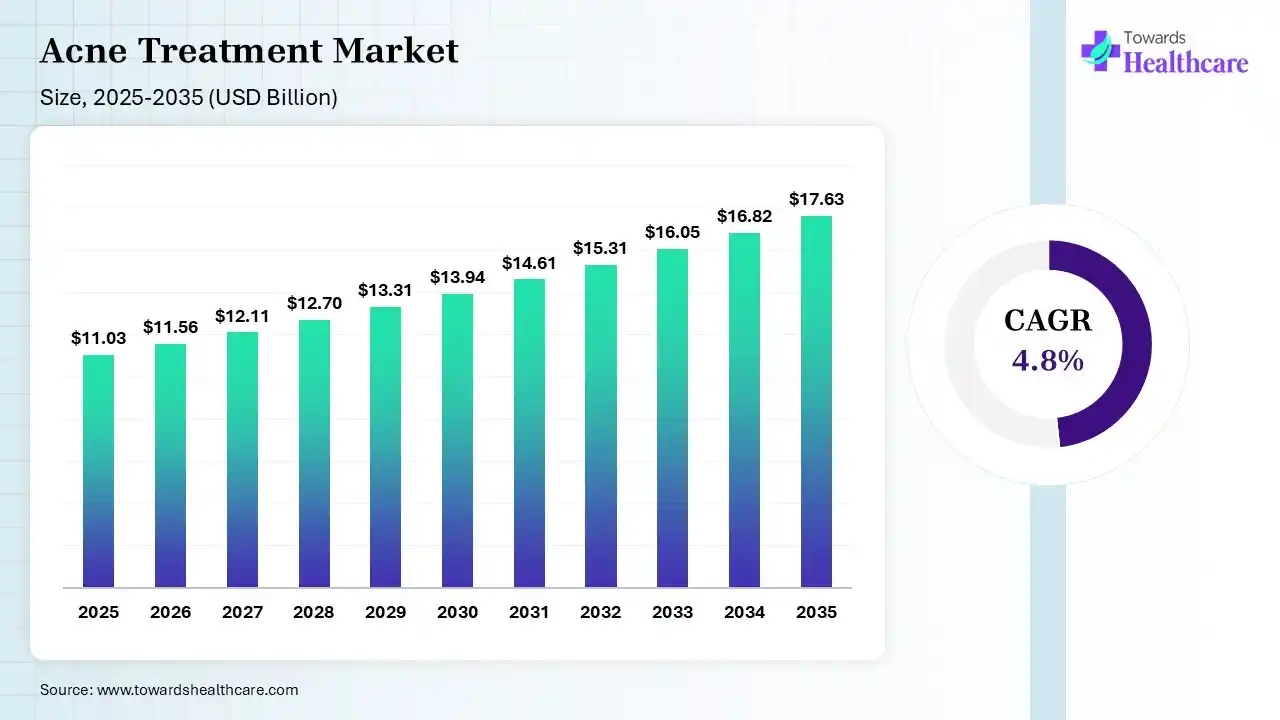
The global acne treatment market size marked USD 11.03 billion in 2025 and is forecast to experience consistent growth, reaching USD 11.56 billion in 2026 and USD 17.63 billion by 2035 at a CAGR of %.
Acne treatment involves a range of therapies and procedures aimed at managing or eliminating acne, a common skin condition that occurs when hair follicles become clogged with oil and dead skin cells. Acne can cause pimples, blackheads, whiteheads, and cysts on the face, neck, chest, and back, and it can have a significant impact on a person's self-esteem and quality of life.
Treatment options for acne depend on the severity of the condition and can include topical medications such as benzoyl peroxide, retinoids, and antibiotics, oral medications such as antibiotics and isotretinoin, and various medical procedures such as chemical peels, light therapy, and laser therapy. In addition, lifestyle changes such as avoiding oily or greasy cosmetics, keeping the skin clean and dry, and avoiding squeezing or picking at pimples can also help manage acne.
It's essential to note that not all acne treatments work for everyone, and finding the right treatment can sometimes take time and experimentation. It's crucial to work with a healthcare provider or dermatologist to determine the best treatment plan for your individual needs.
The continuous advancements in therapeutic devices and technology have led to the development of various innovative treatment options for acne. For instance, light-based devices like blue light therapy have gained immense popularity as a non-invasive and effective treatment option for mild to moderate acne.
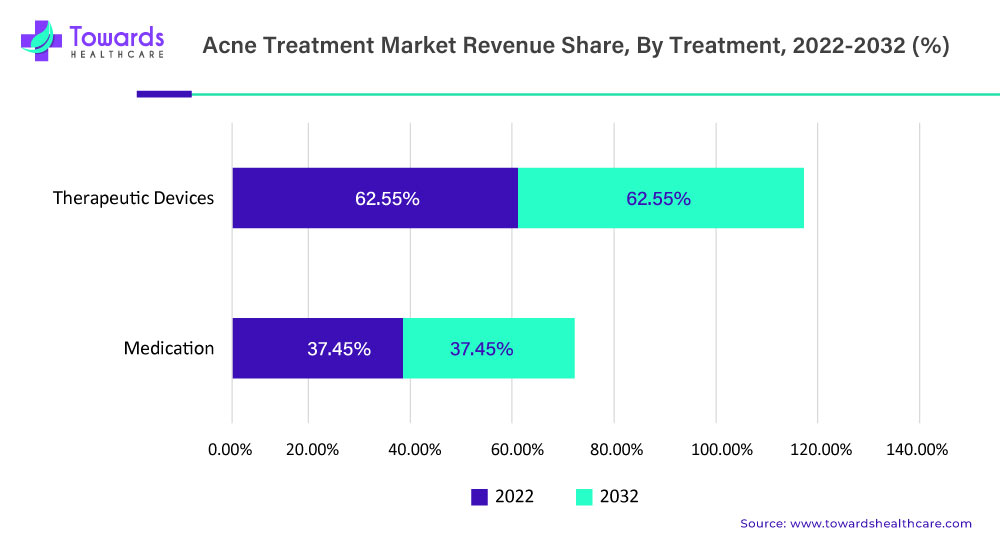
Therapeutic devices have emerged as a promising solution for acne treatment, paving the way for market growth. The demand for these devices is increasing due to their effectiveness in treating acne and reducing the associated scarring. Therapeutic devices such as light therapy devices and micro-needling devices are gaining popularity as they offer a non-invasive and painless solution for acne treatment. Additionally, these devices have minimal side effects and offer faster recovery times, making them a preferred choice for many patients.
The market growth for acne treatment devices is also driven by factors such as the increasing prevalence of acne, rising awareness about the availability of advanced acne treatment options, and the growing demand for minimally invasive cosmetic procedures. Moreover, the increasing disposable income of people and the expanding healthcare infrastructure in emerging economies are further driving the growth of the acne treatment devices market.
Over the course of the projection period, it is also anticipated that developing trends in handheld and portable therapeutic devices would boost market demand. Additionally, the demand for such devices is being further boosted by the growing number of spas and therapeutic treatment facilities around the world.
Artificial intelligence (AI) can play a vital role in acne treatment by accurately detecting acne. It can also grade the severity of the disease, enabling dermatologists to provide effective treatment regimens. AI can also suggest personalized treatment for acne patients and predict their treatment outcomes. This leads to enhanced efficiency and precision. It can aid in screening acne in patients, even with minor symptoms. The advent of AI-based sensors helps detect acne through wearable devices or smartphone apps. This enables dermatologists to assess patient conditions from the comfort of their homes and monitor their treatment progress.
By product, the antibiotics segment led the global market in 2024. Some antibiotics are widely available as over-the-counter medications. Tetracyclines, macrolides, and erythromycin are some of the examples of antibiotics used for acne treatment. The availability of generic alternatives and the ability for faster relief promote the segment’s growth. Antibiotics help to kill microorganisms responsible for causing acne and reduce inflammatory symptoms. Additionally, they are available in both topical and oral forms, enhancing patient treatment outcomes.
By product, the retinoids segment is projected to expand rapidly in the market in the coming years. Retinoids are a class of compounds that derive from vitamin A, mainly used for reducing wrinkles and signs of aging on the face. They are the treatment of choice for acne that reduces acne outbreaks by preventing dead cells from clogging pores. They act by targeting the root cause of the disease, resulting in faster relief and better treatment outcomes. They are comparatively safer and can be used for long-term treatment.
By route of administration, the topical segment registered its dominance over the global market in 2024. Topical medications such as creams and ointments are available to treat acne. The topical route can provide faster symptom relief as they are directly applied to the target site. They have reduced side effects and toxicity to other organs compared to systemic medications. Their affordability and ease of application make them preferable. Another advantage includes ease of dose titration and termination depending on a patient’s needs and providing personalized care to patients.
By route of administration, the oral segment is predicted to witness significant growth in the market over the forecast period. The segmental growth is attributed to their easy availability and administration. They are comparatively cost-effective due to the availability of generic alternatives. Moreover, it is widely preferred due to its non-invasiveness, patient compliance, and flexibility in dosage forms.
By age group, the 18 to 44 years segment held the major share of the market in 2024. The age group of 18 to 44 years is more likely to develop acne due to a variety of reasons, such as environmental factors, stress, and other chronic disorders. The four factors that contribute to acne in this age group are excess oil production, pores becoming clogged by sticky skin cells, bacteria, and inflammation. The increasing ratio of this particular age group drives the segment’s growth. Additionally, people of this age group are more aware of their aesthetic appearance or skin disorders.
By age group, the 10 to 17 years segment will gain a significant share of the market over the studied period. This age group is more prone to developing acne due to pubertal and hormonal changes in the body. These changes lead to increased oil production on the skin as oil glands get stimulated during puberty. It is estimated that more than 85% of teenagers suffer from teen acne due to more sebum production.
By treatment, the medication segment is expected to grow at the fastest rate in the market during the forecast period. Medications such as antibiotics, benzoyl peroxide, and retinoids increase the accessibility of acne treatment. They are available in both topical and oral formulations, providing patients with enhanced efficacy. The segmental growth is attributed to affordability and increasing medication adherence. The availability of over-the-counter drugs and generic alternatives promotes the segment’s growth. In addition, medications do not require any skilled professional to administer them.
By end-user, the MedSpa segment is anticipated to grow with the highest CAGR in the market during the studied years. MedSpa, or medical spa, is a place that provides non-surgical aesthetic medical services. They are a unique blend of medications and aesthetics, providing quality cosmetic treatments in a relaxing and calming environment. The growing demand for personalized care increases the demand for MedSpa. They provide professional and medically supervised treatments in a relaxing environment. The presence of skilled professionals results in effective treatment and care for patients. Moreover, medical spa treatments for acne yield faster results with minimal downtime. They also provide long-term benefits with improved confidence by reducing the appearance of acne.
North America was the highest contributor to this market, with 45.08% revenue share in 2022, and is anticipated to reach 46.91% revenue share by 2032, registering a CAGR of 5.2% from 2023 to 2032.
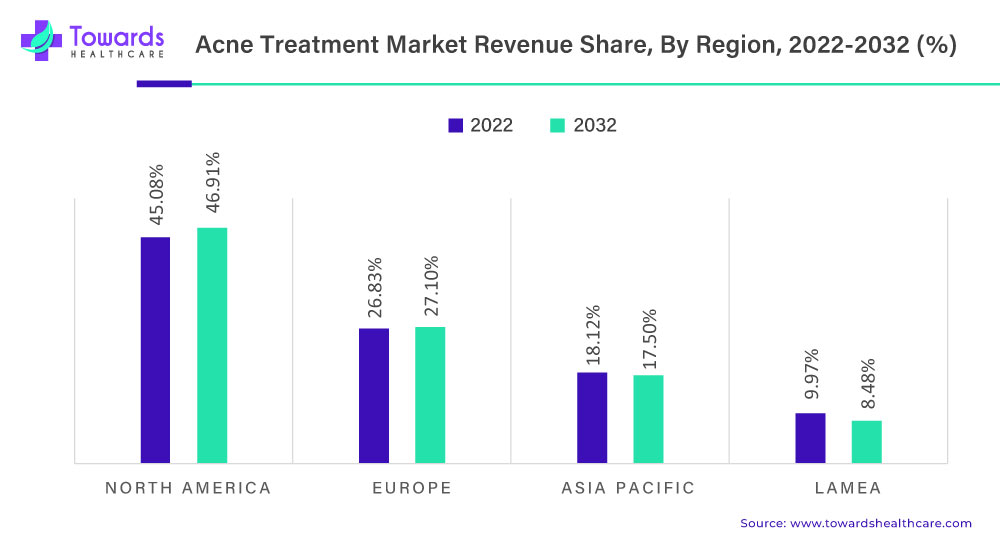
The North America acne treatment market is a significant contributor to the global market and is expected to continue to grow in the coming years. The market growth in North America can be attributed to several factors, including a high prevalence of acne in the region, an increasing demand for advanced acne treatments, and the presence of major market players in the region.
The high prevalence of acne in North America is one of the primary drivers of market growth. According to the American Academy of Dermatology Association, acne is the most common skin condition in the United States, affecting up to 50 million Americans annually. This high prevalence has led to a significant demand for advanced acne treatments, which is expected to drive market growth in the region.
Additionally, the presence of major market players, such as Johnson & Johnson, Nestle SA, and Allergan, in the region is another driving factor. These companies are investing in research and development activities to introduce new and advanced acne treatments, which is expected to further propel market growth in North America.
Due to the greater frequency of acne among residents of the region's countries, the North American market accounted for the greatest revenue share. The main causes of acne prevalence growth are poor dietary habits and rising stress levels. The demand for different topical therapies has increased as a result, and new FDA-approved medications have been developed to treat acne that is hormonally based.
U.S. Market Trends
The U.S. has a large acne treatment market, supported by high diagnosis and treatment demand. The American Academy of Dermatology estimates acne affects nearly 50 million Americans each year, while about 85% of adolescents experience acne. Demand is supported by prescription medicines, over-the-counter products, dermatology services, and growing interest in newer topical treatments. Strong healthcare infrastructure and product innovation support market development and treatment access nationwide.
Canada Market Trends
Canada has strong demand for acne treatments due to a large affected population and high adolescent prevalence. The Canadian Dermatology Association reports that acne affects about 5.6 million Canadians, or nearly 20% of the population. More than 80% of sufferers are aged 12 to 24. Demand is supported by dermatology services, prescription medicines, and over-the-counter skincare products. Product accessibility and treatment awareness support market growth across Canada.
Asia Pacific is expected to grow significantly in the acne treatment market during the forecast period. Asia Pacific is experiencing an expansion in the healthcare sector. The healthcare sector are utilizing various technological advancements for developing new acne treatment options. This is further supported by the government.
China Market Trends
China represents an important acne treatment market due to its large population and substantial disease burden. Global Burden of Disease data estimated 42.8 million acne cases in China in 2019. The same study reported a prevalence rate of about 4,125 cases per 100,000 people. Demand is supported by dermatology services, skincare awareness, and growing treatment needs among younger consumers. Urbanization and changing lifestyles also influence demand and product use.
India Market Trends
India has strong demand for acne treatments because acne is highly common among adolescents and young adults. One Indian study reported acne among 69.97% of 869 participants aged 14 to 25 years. Another Indian source notes prevalence around 91% in adolescent males and 79% in adolescent females. Demand is supported by dermatology clinics, prescription medicines, affordable topical products, and increasing awareness of acne management and scarring prevention.
Europe has a strong acne treatment market supported by high acne prevalence among teenagers and young adults. Around 95% of people aged 11 to 30 in the UK experience acne to some extent, highlighting regional demand. Treatment options include retinoids, antibiotics, isotretinoin, and newer topical medicines. European guidelines also emphasize responsible antibiotic use. Growing dermatology awareness and recent product launches are supporting treatment access across European countries and markets.
UK Market Trends
The UK has significant demand for acne treatments. NHS guidance states that about 95% of people aged 11 to 30 experience acne to some extent, while around 3% of adults over 35 have acne. Demand is supported by primary care, dermatology services, pharmacies, and prescription medicines. The market is also seeing interest in newer topical treatments. Greater awareness of scarring and psychological effects supports earlier treatment and professional care.
Germany Market Trends
Germany has a strong acne treatment market supported by widespread adolescent acne and developed healthcare services. Government health information states that 15% to 30% of adolescents have moderate to severe acne. Treatment demand includes prescription medicines, topical products, dermatology care, and skincare products. Recent research ranked Germany among countries with high acne prevalence. Growing awareness of treatment and scar prevention supports demand, while access to specialists remains important nationwide.
Clinical approvals and drug launches play a crucial role in empowering the healthcare industry, and the same can be said for the acne treatment market. The introduction of new drugs and therapies has transformed the landscape of acne treatment, providing more options to patients and clinicians alike.
In recent years, the acne treatment market has witnessed several clinical approvals and drug launches, driving market growth across the globe. The approval of new drugs and therapies has not only provided more treatment options but has also encouraged pharmaceutical companies to invest more in research and development. This, in turn, has led to the discovery of novel drugs and therapies, further driving market growth. Additionally, clinical approvals and drug launches have increased competition in the market, leading to more affordable and accessible treatments for patients.
Moreover, clinical approvals and drug launches have helped in addressing the unmet needs of patients with acne, particularly those with severe or persistent acne. With the availability of new drugs and therapies, patients can now receive more personalized treatment plans that cater to their specific acne type and severity.
More people are seeking treatment to address lesions, inflammation, and scarring as a result of acne's visible nature. And since there is such great demand, acne remedies are constantly changing and evolving. Manufacturers have become aware of the condition's rising incidence among teenagers and adults, which has increased the demand for treatments. The major goal of drug development is to treat acne, which is challenging to do safely and effectively. Most of the players in the market are concentrating on releasing unique pharmaceuticals to meet demand, which is the main trend for the market's growth. Some of the recent approvals of drugs and launch of drugs include:
The approval of these drugs has significantly impacted the acne treatment market, providing dermatologists and patients with more treatment options. This has, in turn, boosted market growth and paved the way for further innovations in the field. Thus, clinical approvals and drug launches have played a significant role in empowering the healthcare industry and the acne treatment market. They have provided clinicians and patients with more treatment options, increased competition, and encouraged further research and development. As such, they will continue to drive market growth in the years to come.
Acne treatment has come a long way over the years, from being a source of shame and embarrassment for those who suffer from it to a condition that can be confidently and effectively treated in aesthetic medicine. Advances in technology and research have led to the development of innovative treatments that have transformed the lives of millions of people worldwide.
One of the most significant advances in acne treatment is the use of laser therapy. Laser treatments for acne work by penetrating the skin with high-intensity light, which targets and destroys the bacteria responsible for causing acne. This therapy can also stimulate collagen production, which can improve the appearance of acne scars. Laser therapy is a non-invasive treatment that is safe, effective, and produces long-lasting results. Another major development in acne treatment is the use of chemical peels. Chemical peels involve applying a solution to the skin, which causes the top layer to peel off, revealing smoother, more youthful-looking skin. These peels can help unclog pores, reduce inflammation, and improve the overall appearance of acne-prone skin.
Additionally, aesthetic medicine has seen the rise of combination therapies, which involve using multiple treatments simultaneously or sequentially to achieve optimal results. For example, a combination of laser therapy and chemical peels can be used to treat moderate to severe acne and reduce the appearance of scars.
Furthermore, the increasing focus on aesthetics is also expected to support the growth of the market in the years to come. People are now more conscious and focused on their appearances with acne treatments gaining substantial importance. Acne is among the most frequent reasons for visits to aesthetic professionals. On the one hand, chains of cosmetic clinics are merging to improve their growth prospects. On the other hand, a great number of new medical specialists are entering the market to offer services in the field of aesthetics, such as skin care treatments including acne. Patients now have more alternatives for where to get treatment because of the proliferation of aesthetic service providers. More than 500 aesthetic clinics and care facilities have raised billions of dollars from investors over the past five years, making them the fastest-growing sector of the industry.
Thus, the evolution of acne treatment in aesthetic medicine has transformed the way acne is perceived and treated. People no longer have to suffer in silence or hide their acne, as there are now effective and safe treatments available that can help them achieve clear, healthy-looking skin and boost their confidence.
Over-the-counter (OTC) medications have become a popular choice for consumers seeking convenient and affordable healthcare solutions. The acne treatment market is no exception, as OTC medications have played a significant role in meeting the growing demand for accessible and cost-effective acne treatments.
OTC medications for acne treatment are widely available in drugstores and supermarkets, and they do not require a prescription. These medications often contain active ingredients such as benzoyl peroxide, salicylic acid, or sulfur, which work to reduce inflammation and unclog pores. OTC medications offer a convenient and accessible alternative for individuals with mild to moderate acne who may not require prescription medication or dermatologist supervision.
The demand for OTC acne treatments has increased in recent years, with many consumers seeking affordable and convenient options for managing their acne. This has led to the growth of the OTC acne treatment market, which is expected to continue expanding in the coming years.
In addition to convenience and affordability, OTC acne medications also offer a degree of anonymity to individuals who may feel embarrassed or self-conscious about their acne. By being able to purchase and use acne treatments without a prescription or medical supervision, individuals may feel more empowered to take control of their acne and improve their skin health.
Thus, the growth of the OTC acne treatment market reflects the increasing demand for accessible and affordable healthcare solutions. These medications have become an important part of the acne treatment landscape, offering a convenient and cost-effective alternative to prescription medication and dermatologist visits.
The use of drugs in acne treatment, like any other medical treatment, can have side effects. Some common side effects of acne medications include dryness, redness, peeling, and irritation of the skin. More serious side effects such as allergic reactions, liver damage, and depression are rare but possible.
Moreover, there is a growing concern about counterfeit acne medications in the market, which can be dangerous for patients. These counterfeit medications may not contain the active ingredients necessary to treat acne or may contain harmful substances that can cause adverse reactions.
To address these issues, regulatory bodies like the FDA have implemented strict regulations on the manufacturing and distribution of acne medications. Consumers are advised to purchase acne medications from trusted sources and to always read the label and instructions carefully before use.
Counterfeit medications and the potential side effects of acne drugs can impact market growth as patients may lose trust in the efficacy and safety of these treatments. However, with proper regulations and consumer awareness, the market can continue to grow and provide effective and safe solutions for acne treatment.
The rise of e-commerce platforms has transformed the way people shop for various products and services, including healthcare solutions. In recent years, there has been a significant increase in the availability of online acne solutions, which has disrupted the traditional methods of acne treatment.
Online acne solutions offer several benefits to consumers, including convenience, accessibility, and affordability. Patients can easily access a wide range of acne treatment products and services online, including prescription medications, over-the-counter products, and skincare regimens. This convenience and accessibility have contributed to the growth of the online acne solutions market.
In addition, e-commerce platforms offer a wider range of products and services than traditional brick-and-mortar stores. Patients can compare prices, read reviews, and purchase products without leaving their homes. Additionally, many e-commerce platforms offer personalized acne treatment plans and virtual consultations with licensed dermatologists.
However, the rise of online acne solutions has also led to concerns about the quality and safety of products. Some online platforms may sell counterfeit or substandard products, which can have adverse effects on patients' health. Therefore, it is crucial for patients to be cautious when purchasing acne treatment products online and to ensure they are buying from reputable sources.
But, the rise of e-commerce platforms has transformed the acne treatment market, providing patients with more convenient and accessible options for managing their acne. However, patients should also be aware of the potential risks and take necessary precautions to ensure the safety and efficacy of the products they purchase.
Taylor Harris, CEO of Cutera, commented that the company believes in transforming lives through the advancement of its technologies. He also said that they are dedicated to introducing treatments like AviClear, helping people overcome insecurities and embrace life with confidence. The company is continuously investing in research and innovation driven by passion to make a meaningful impact on patient’s lives.
R&D identifies new acne targets, active ingredients, delivery systems, and improved therapies. Research teams evaluate efficacy, safety, tolerability, stability, and patient needs before advancing promising candidates into clinical development programs.
Companies involved: Galderma, Almirall, Sun Pharmaceutical Industries, Bausch Health, Johnson & Johnson, Pfizer, AbbVie
Clinical trials assess safety, effectiveness, dosing, and side effects in patients. Successful studies support regulatory submissions and reviews, labeling decisions, approvals, and continued safety monitoring after launch for patient requirements.
Companies involved: Pfizer, AbbVie, Galderma, IQVIA, Almirall, Bausch Health, Sun Pharmaceutical Industries
Formulation and final dosage preparation converts active ingredients into creams, gels, lotions, tablets, or capsules. Manufacturers optimize product stability, consistency, absorption, packaging compatibility, and product performance for reliable use for patients.
Companies involved: Galderma, Bausch Health, Sun Pharmaceutical Industries, Almirall, Viatris, Teva, Mayne Pharma
Packaging and serialization protect products and support traceability. Manufacturers use suitable containers, labels, barcodes, and unique identifiers to improve overall product safety, inventory control, authentication, and regulatory compliance during distribution.
Companies involved: West Pharmaceutical Services, Berry Global, AptarGroup, Schreiner MediPharm, Zebra Technologies, Systech, Siemens
Distribution connects manufacturers with hospitals, pharmacies, wholesalers, and other healthcare providers. Efficient warehousing and logistics help maintain product availability, proper storage conditions, timely delivery, and appropriate inventory levels across markets.
Companies involved: McKesson, Cardinal Health, Cencora, Walgreens Boots Alliance, CVS Health, AmerisourceBergen, Medline Industries
Patient support includes treatment education, adherence guidance, product information, reminders, and access services. These programs help patients understand therapy, manage treatment expectations, and continue appropriate care safely and consistently long-term.
Companies involved: Galderma, Almirall, Bausch Health, Sun Pharmaceutical Industries, Pfizer, AbbVie, Teva
By Product
By Route of Administration
By Age Group
By Treatment
By Distribution Channel
By End-User
By Region
Speak with a healthcare analyst about your research, consulting, or platform needs.




 sales@towardshealthcare.com